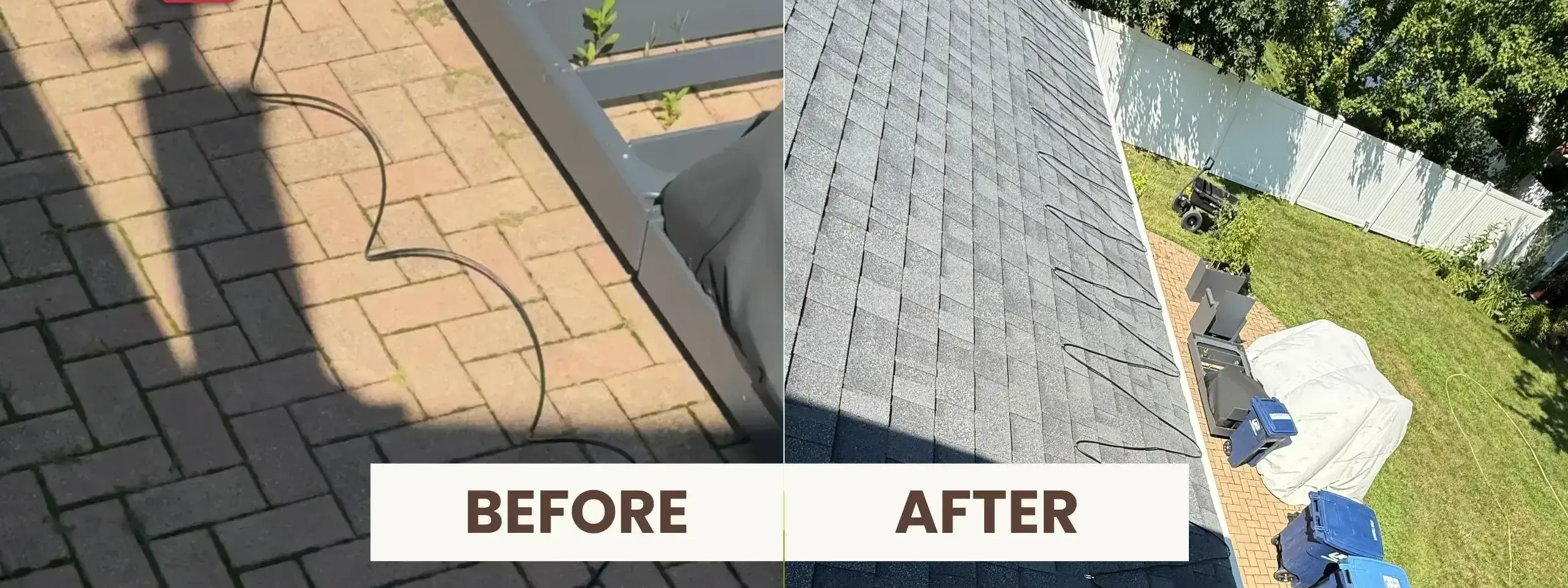
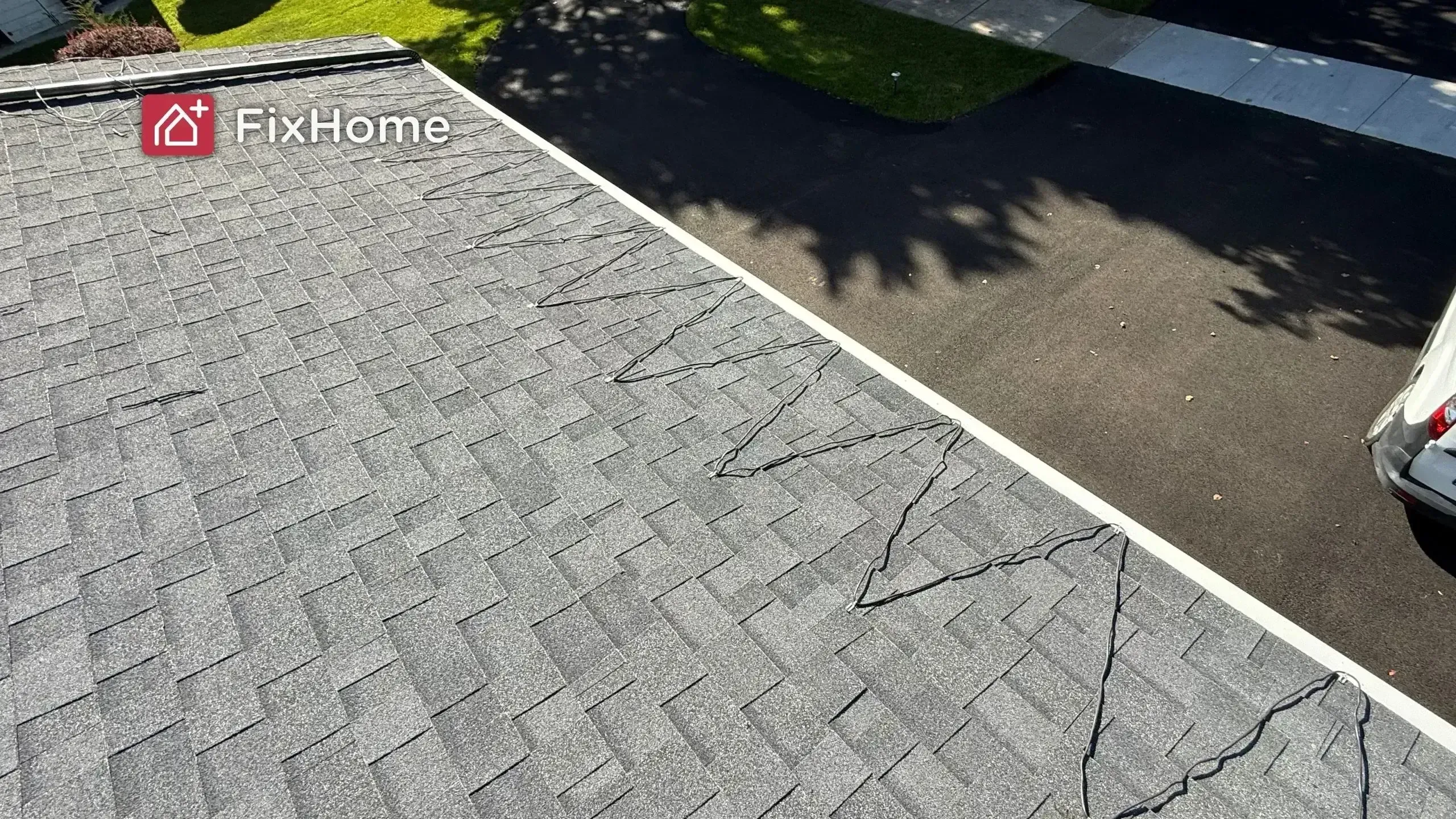
Roof heat cable installation in Deerfield, IL (60015), done ahead of winter to keep ice dams from forming along the roofline. Roman tested three sensors at -3°F before any cable went up, then routed the cable along the gutters and downspouts and clipped it in a zigzag pattern under the shingles at the roof edge. The garage roof and sections of the rear and side rooflines are now covered, using 50-, 100-, and 200-foot cable lengths depending on the section.
Ice dams don't happen all at once. Snow melts, refreezes at the roof edge, and the ice buildup creeps a little further under the shingles each time. One homeowner in Deerfield decided to get ahead of that cycle instead of dealing with it in January.
The Heat Tape Was Tested in a Freezer Before It Went Up
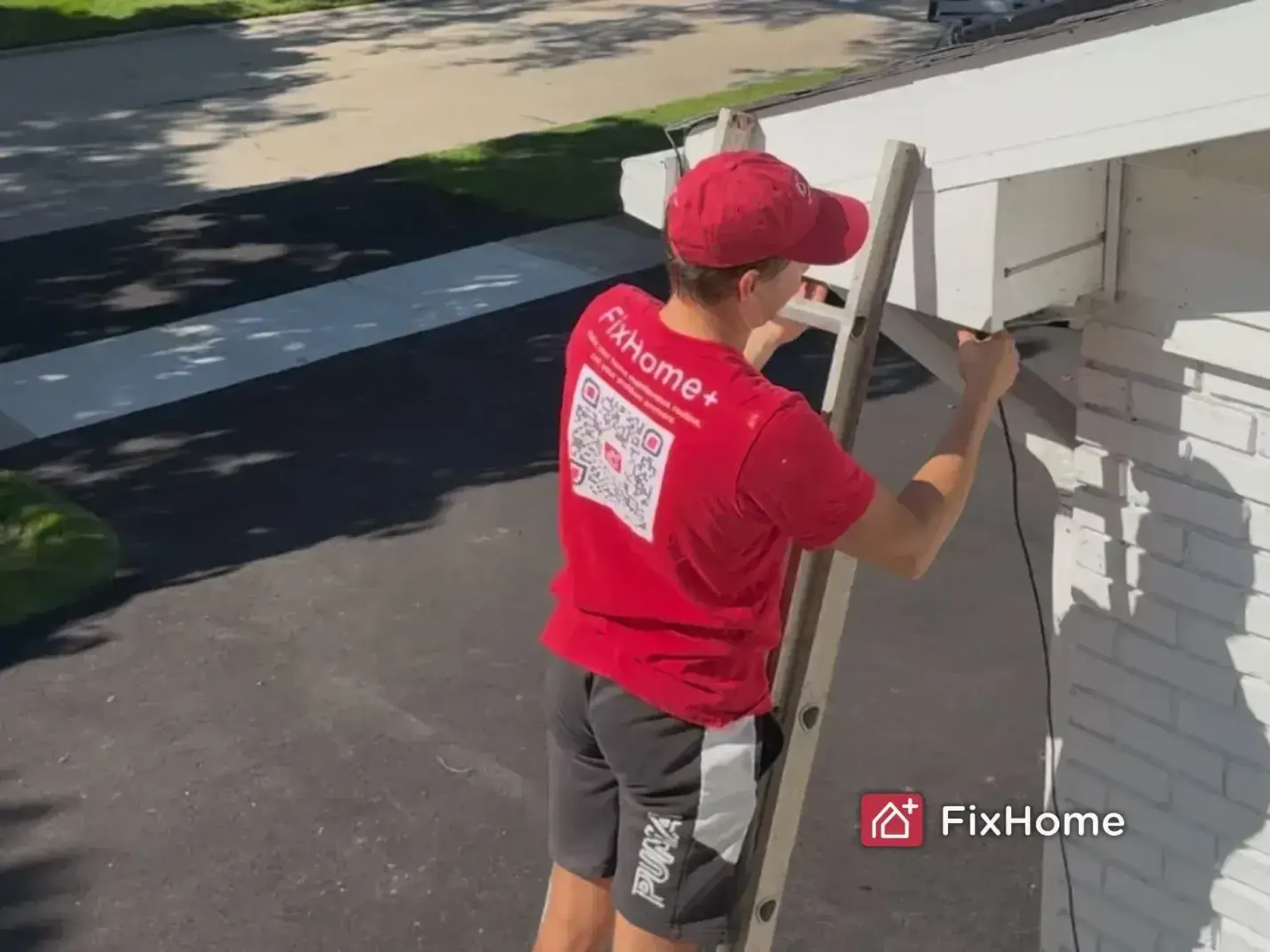
Before any of it touched the roof, the cable got unrolled on the ground and left to straighten out. And that took longer than we thought. So, if you’re hiring professionals and paying them by the hour, you might want to get it done ahead of time. Of course, there’s space in your yard for it. Cable that goes up still coiled never lies flat, and a kink at this stage becomes a permanent one once it's clipped down.
Then came the part most jobs skip. Three sensors went into a freezer at -3°F, one at a time, to confirm they'd trigger in real winter conditions. A sensor that works fine at room temperature doesn't tell you much about how it performs on a roof in the middle of a Chicago cold snap.
Clipped Under the Shingles, Section by Section
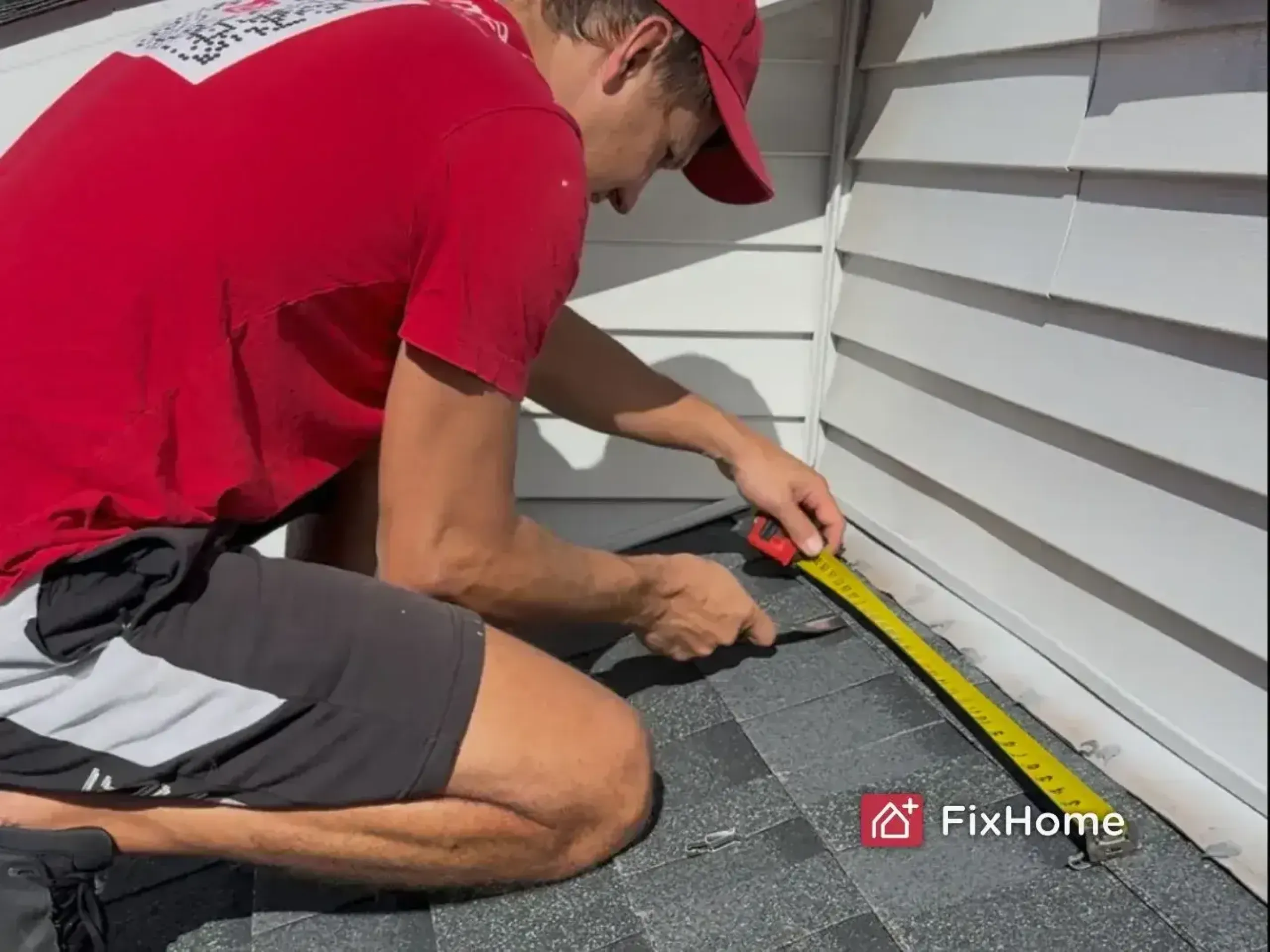
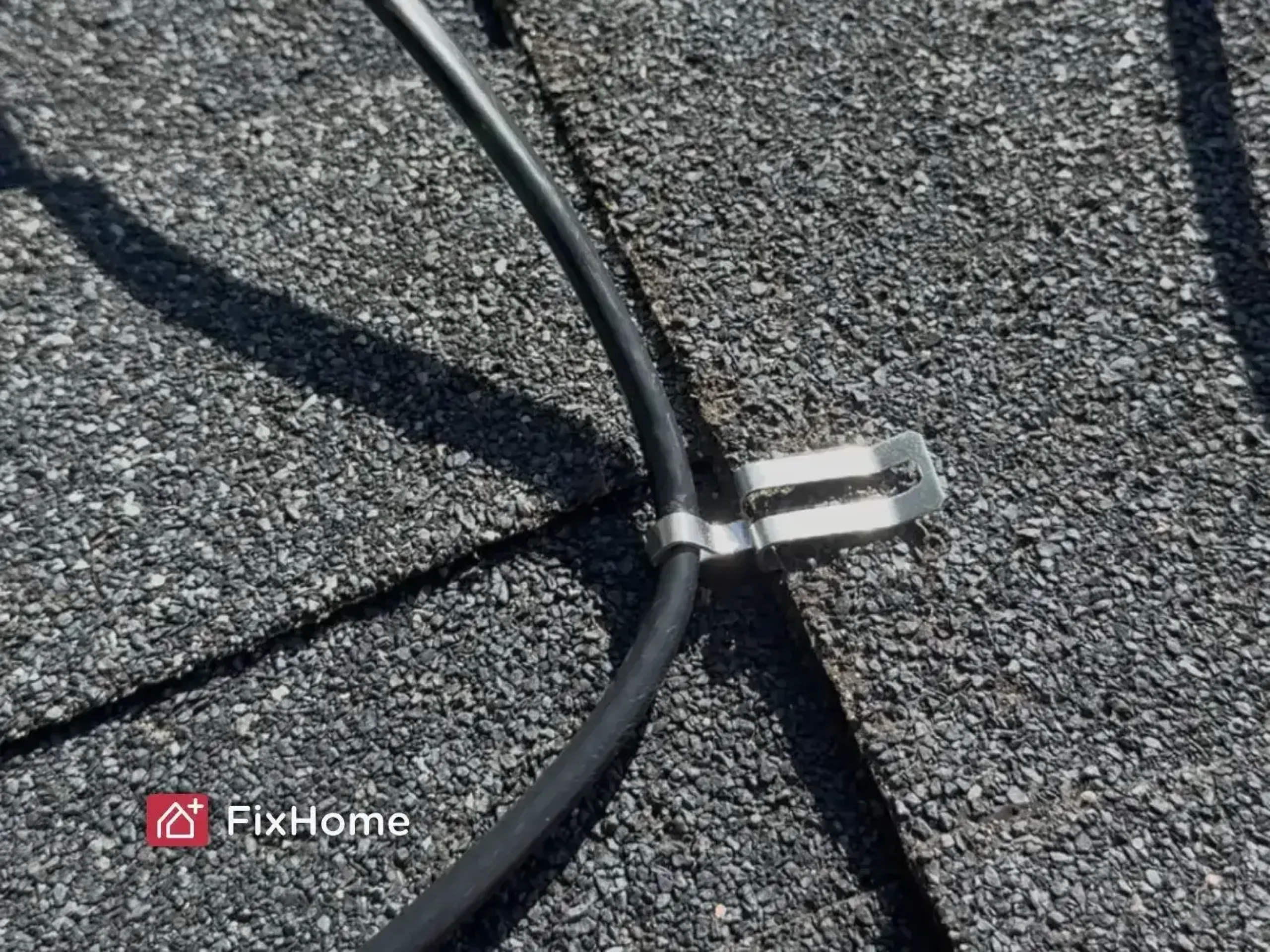
With the sensors confirmed, Roman – FixHome+ handyman in Deerfield, IL, ran the cable along the gutters and downspouts first, following the same path water takes once it starts melting.
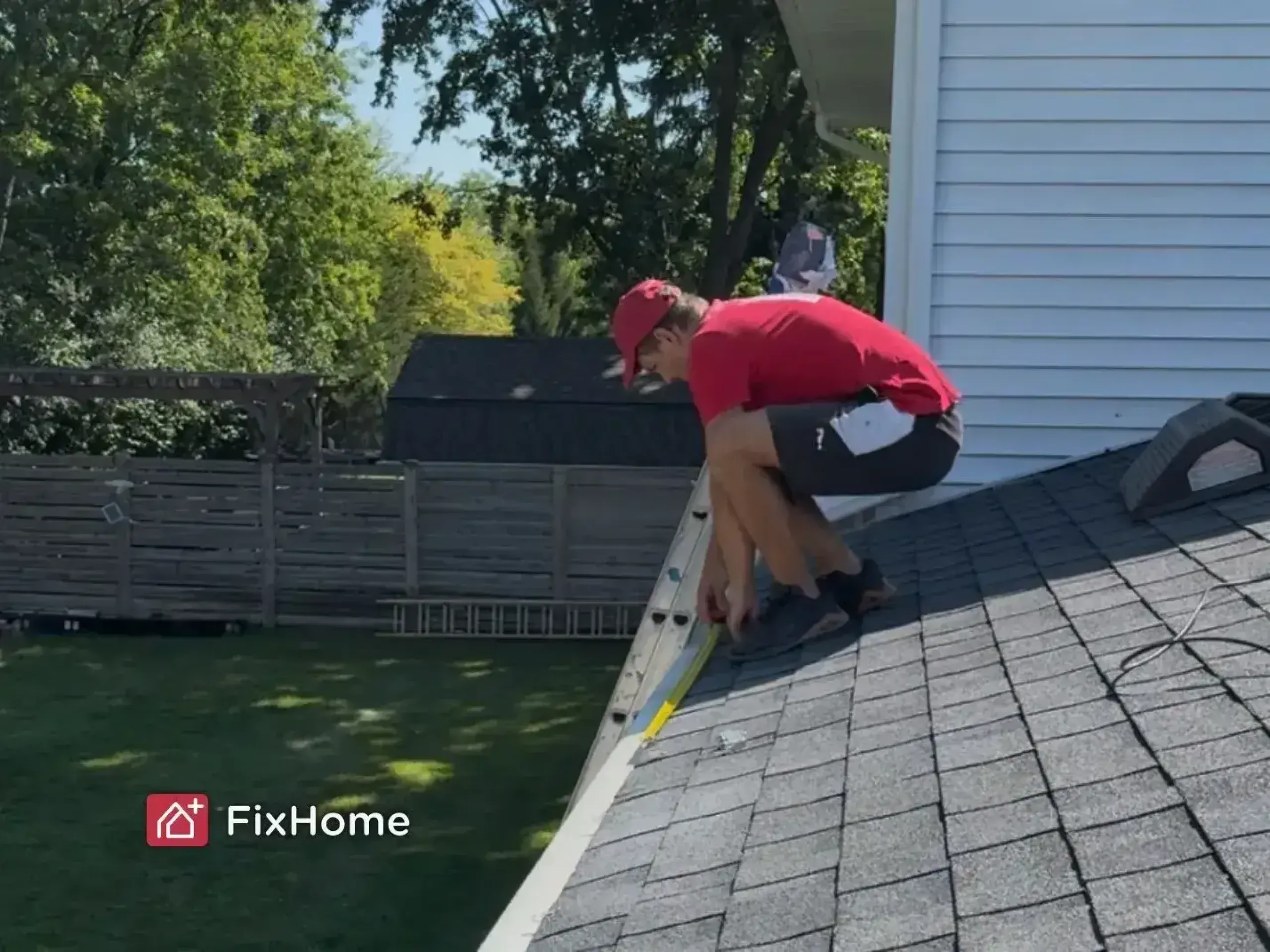
At the roof edge, the pattern changes to a zigzag, measured out and held down with clips and spacers. They're designed for this exact job, tucked beneath asphalt shingle roof parts and other roof types. That's the manufacturer's spec most roof de-icing cable installers follow. Zigzagging roof cables create open melt channels into gutters, bridging warm and cold roof lines so trapped water drains without refreezing under shingles.
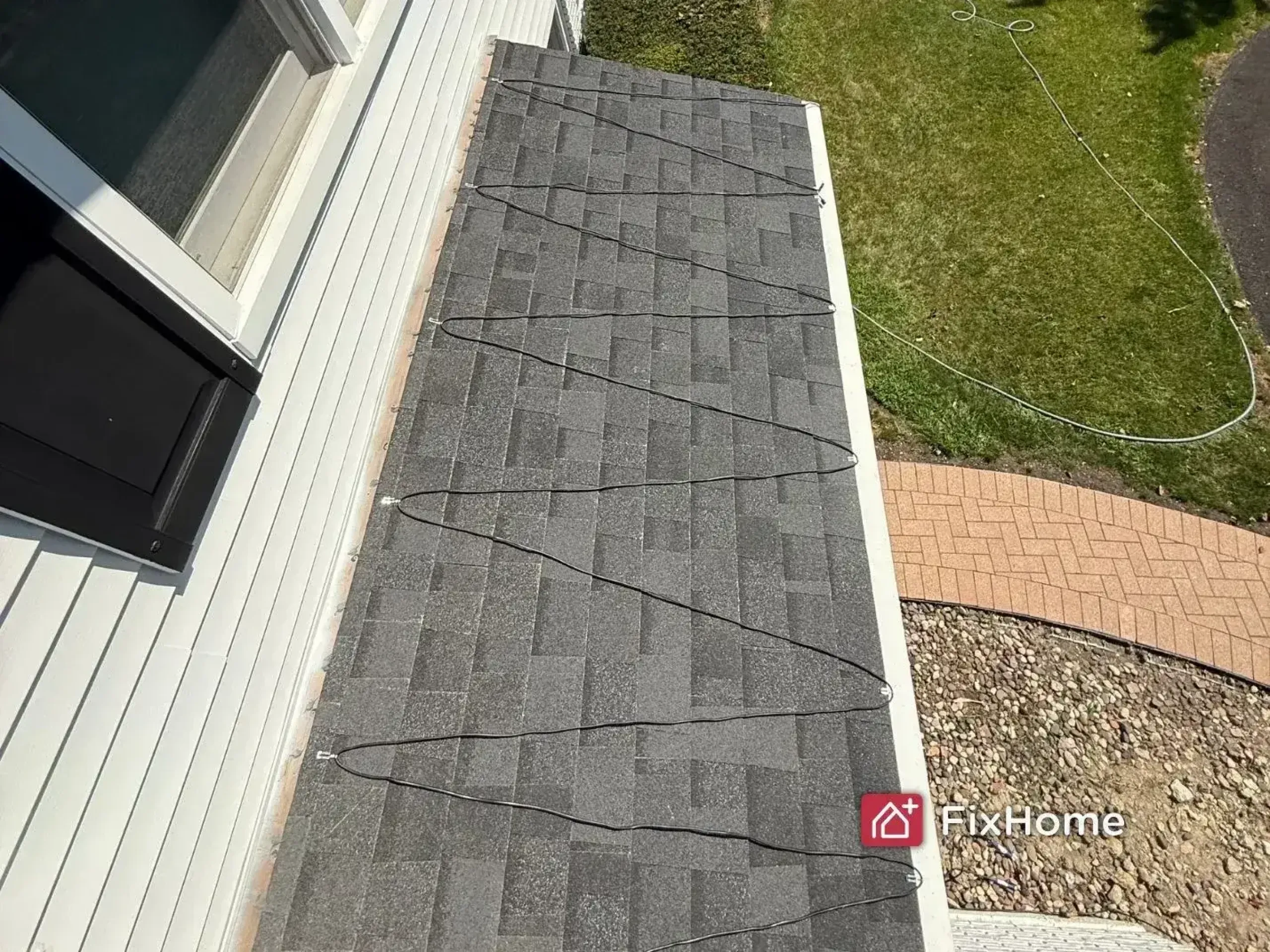
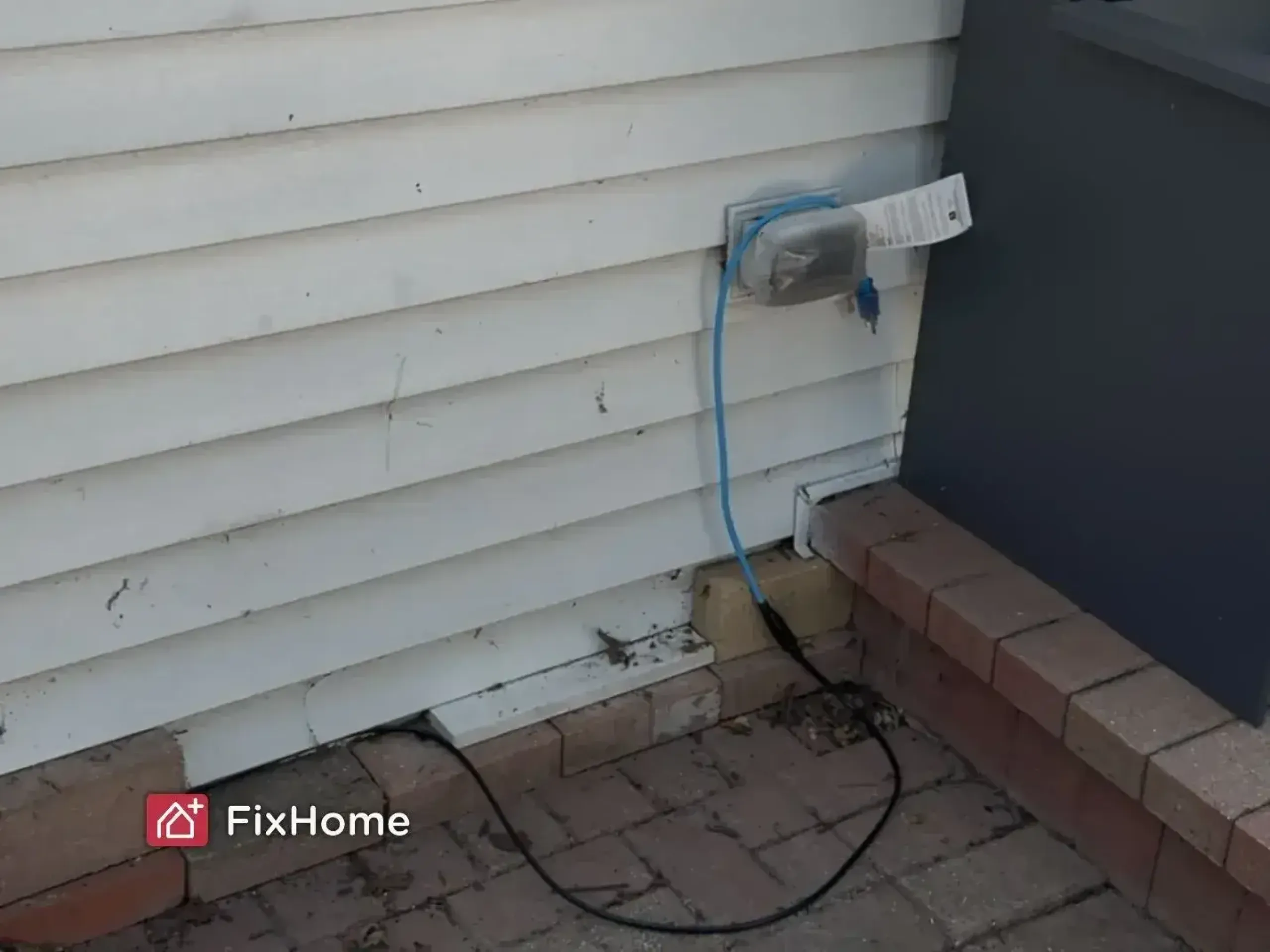
Three cable lengths went into the job: 50 feet, 100 feet, and 200 feet, sized to match each section instead of being cut from one long run.
The longest run ties into an outdoor GFCI outlet at the base of the wall. The other two feed from the garage. For now, it plugs in for the season rather than running off a dedicated line, and a permanent hookup is worth considering later.
The full visit came to a little over three hours, longer than one stop usually gets.
This Deerfield Home's Garage Roof and Rooflines Are Ready for Winter
The garage roof is fully covered now, along with sections of the rear and side rooflines. When snow lands there, the heat cable system gives it somewhere to go instead of freezing solid at the edge. A heated roof like this doesn't stop snow from falling. It just keeps it moving instead of letting it dam up.
If ice dams or icicles show up every winter, roof heat cable installation is worth handling before the cold sets in, not after. FixHome+ covers this kind of work across Deerfield and the wider Northwest Chicago suburbs. Add it in the app and we'll take a look.
Need help with a similar project?
Download FixHome+ and take control of your home tasks.
F.A.Q.s
Systems with a sensor turn on automatically once temperatures drop low enough for snow to start melting and refreezing. That's why testing the sensor beforehand matters. Manual systems get switched on before the first hard freeze and left running through the coldest stretch of the season.
Heat escaping from the attic melts snow higher up on the roof. That water runs down to the colder roof edge, refreezes, and builds into a dam. Once it forms, more water backs up behind it instead of draining, which is where leaks usually start.
Yes. The clips and spacers used in this job are made to hold the cable under the shingles rather than on top of them, which is what the manufacturer specs for this kind of install. Standard fasteners or improvised mounting tend to come loose faster and don't hold the zigzag pattern the way these do.
More from our blog.
Discover more insightful and engaging content from our blog.