Downspout cleaning in Mundelein, IL (60060), but the cleaning was only part of it. The leak at the top of the downspout came from a clogged offset section lower down, which was backing water up against the gutter joint. Roman pulled the downspouts off the wall and cleared the blockage. The discharge end was also pointed the wrong way, sending water at the foundation. He cut new aluminum elbows, extended the drain, and got the water heading away from the house.
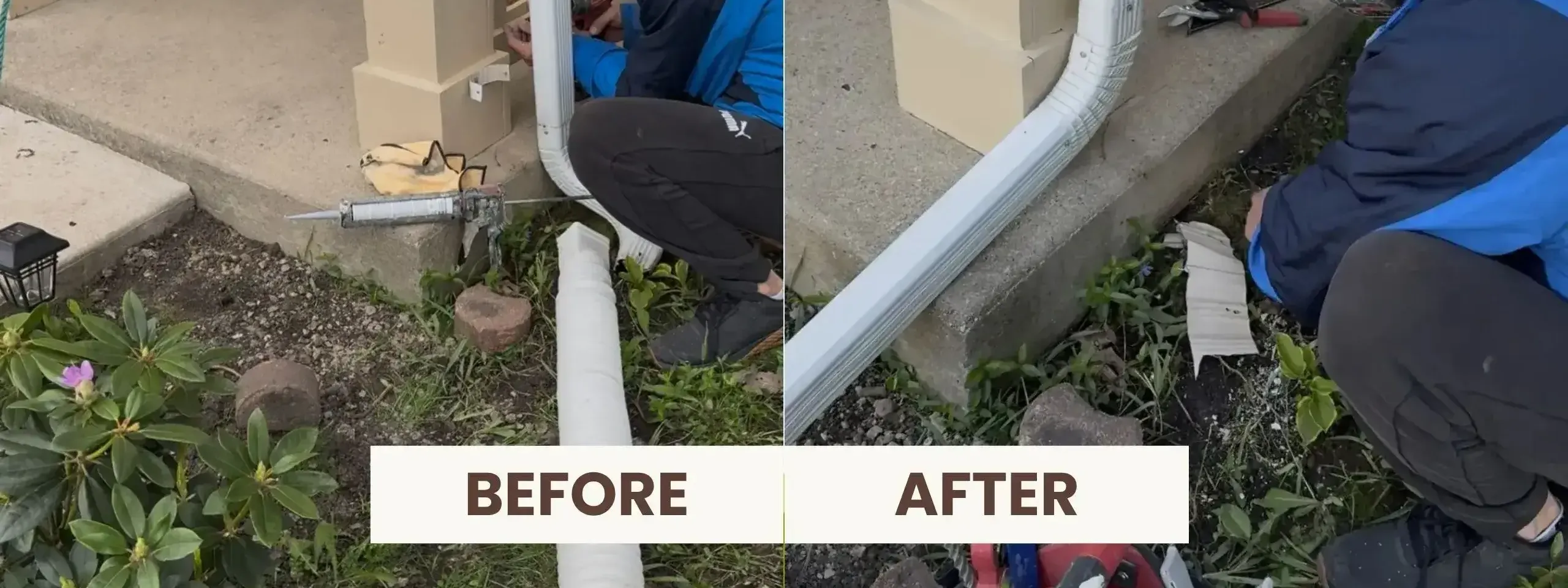
The leak looked like it was coming from the top. Water was running out of the seam where the downspout meets the gutter. That's the part you can see, so that's the part you blame. The actual problem was lower in the pipe. When water backs up somewhere in a downspout, and the pressure has nowhere else to go, it pushes out at the weakest seal it can find. Almost always, that's the top joint. The seal at the top fails first, but the clog is somewhere you can't see.
The leak was at the top, but the clog wasn't.
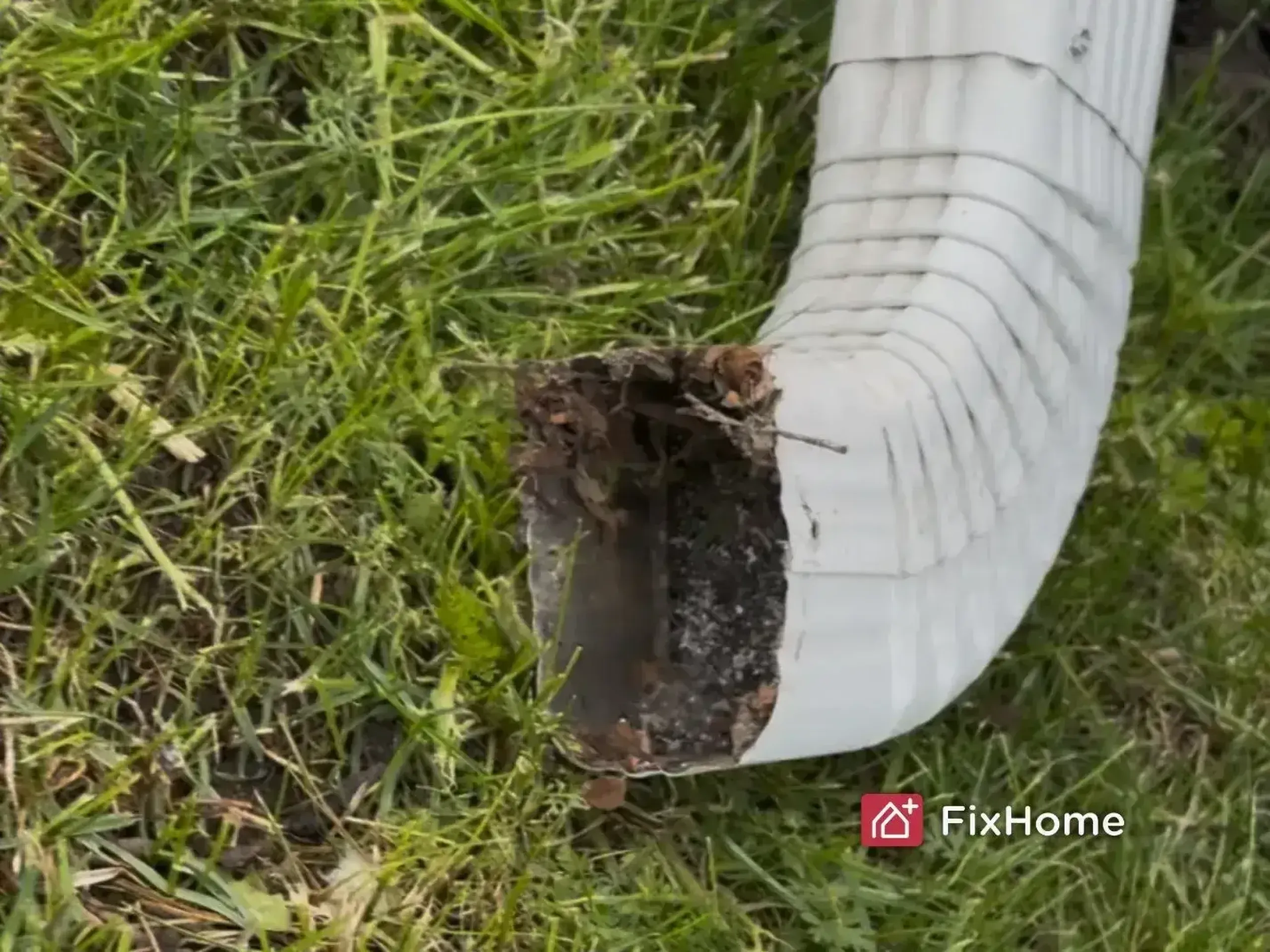
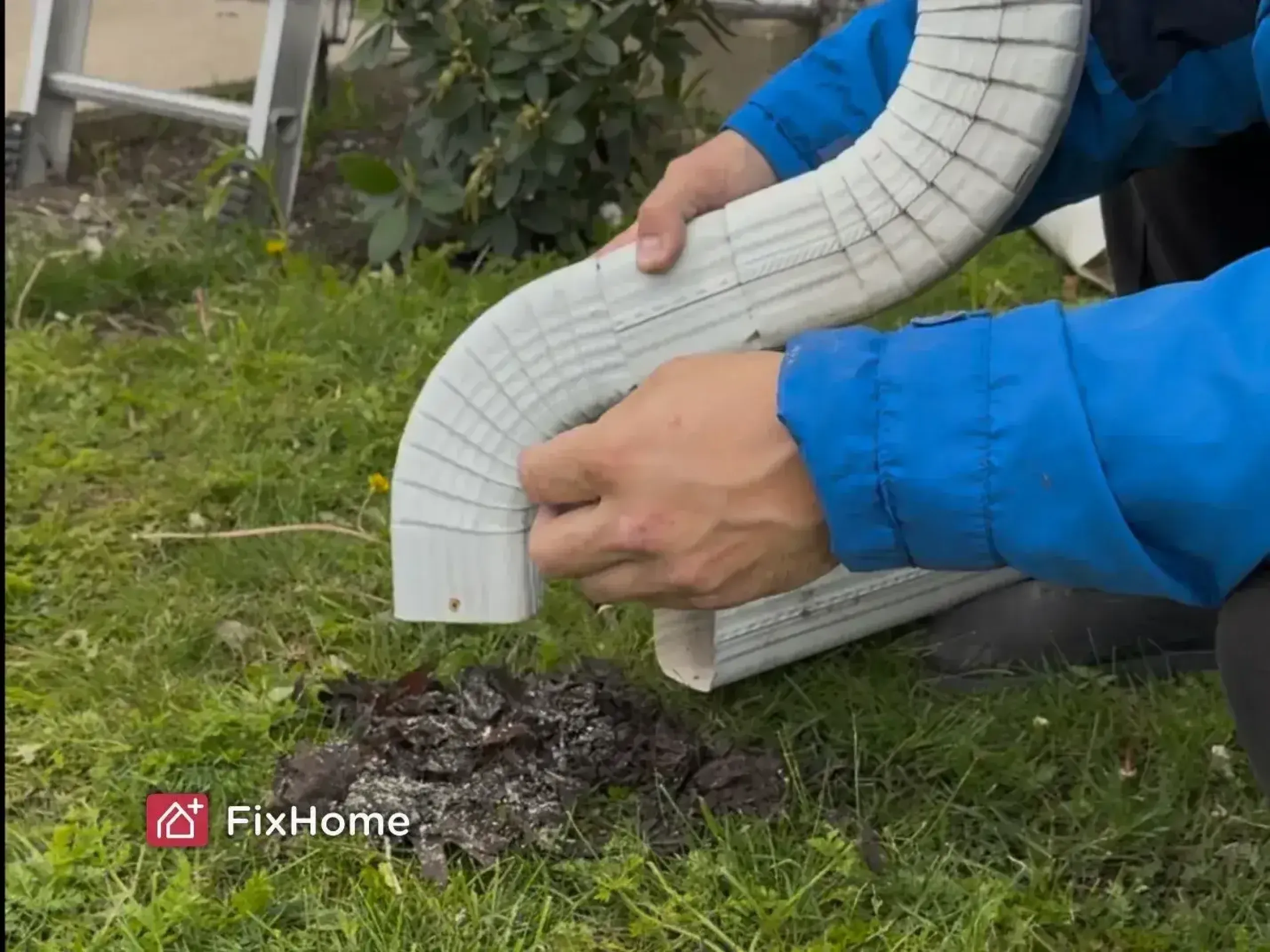
Water was leaking where the downspout meets the gutter, but that joint should be sealed and dry. When it leaks, the cause is almost always below. Water backs up somewhere in the pipe, pressure builds, and it pushes out the highest weak point it can find. In this case, the offset section was packed with leaves and compacted debris, slowing drainage to a stop. The standing water sat in the pipe, worked on the joint above, and that's where the leak showed up. The leak was the symptom. The clog was the cause.
The offset bends the pipe away from the wall, and that angle catches debris on its way down. Left alone, the standing water starts working on the joint above, and the leak gets worse each time it rains. If you're deciding whether to tackle gutter cleaning yourself first, we've compared the main methods separately
Clearing the downspout clog and rebuilding the discharge end
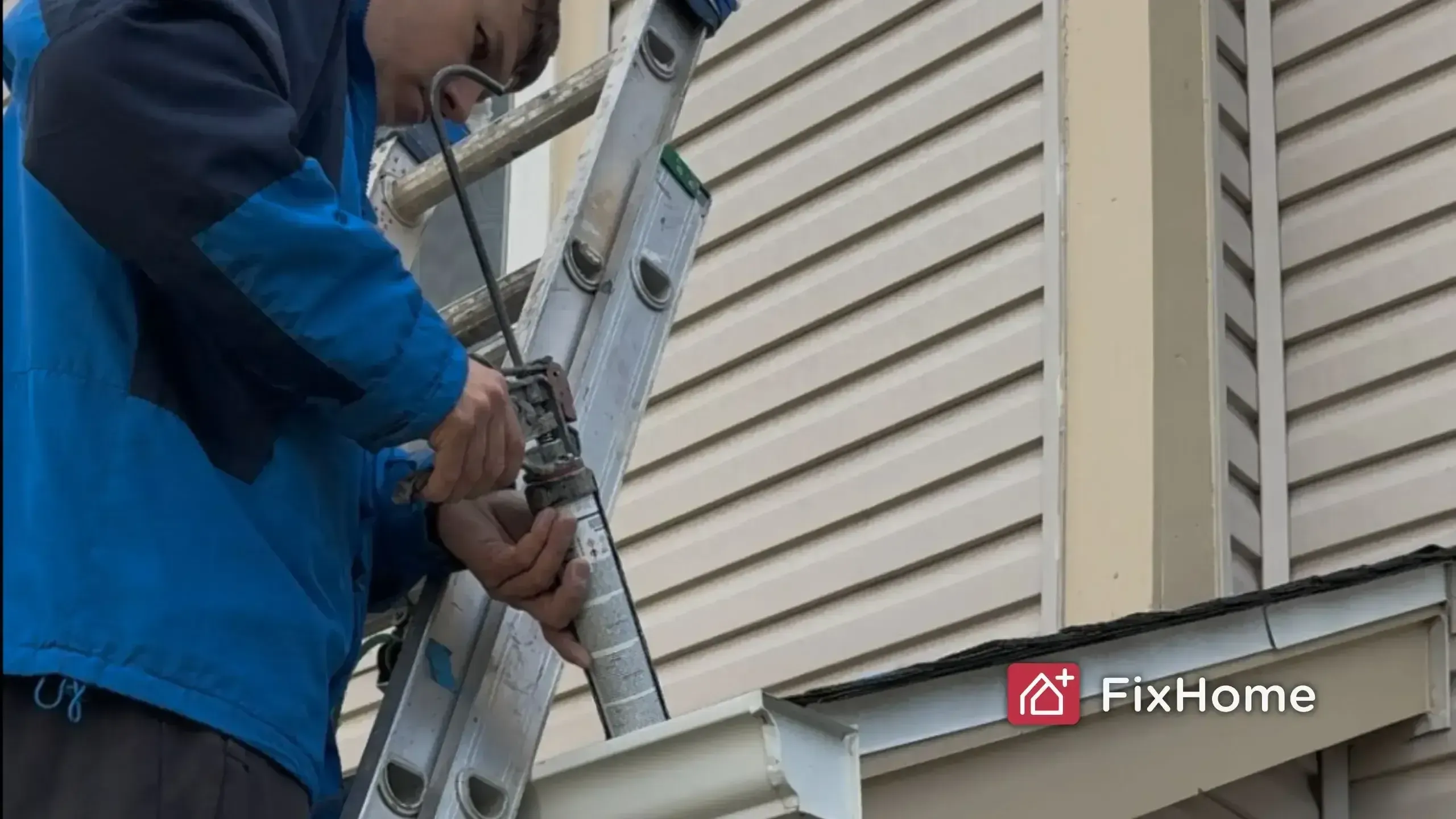
Roman, FixHome+'s all-in-trades in Mundelein, started at the wall. He unscrewed the downspout straps, pulled the sections free, and disconnected them from the gutter at the top. With the pipe off, he snaked out the compacted debris from the offset. The kind that doesn't flush out on its own because it's too dense. Once clear, he checked the inside of each section before reassembling.
Getting the downspouts back on is straightforward, but the fit at the gutter connection matters. A loose joint is where the next clog starts, because debris catches on any gap or step in the pipe. He reassembled the sections, reconnected the gutter, and sealed it. Then, rehung everything on the straps tightly to the wall.
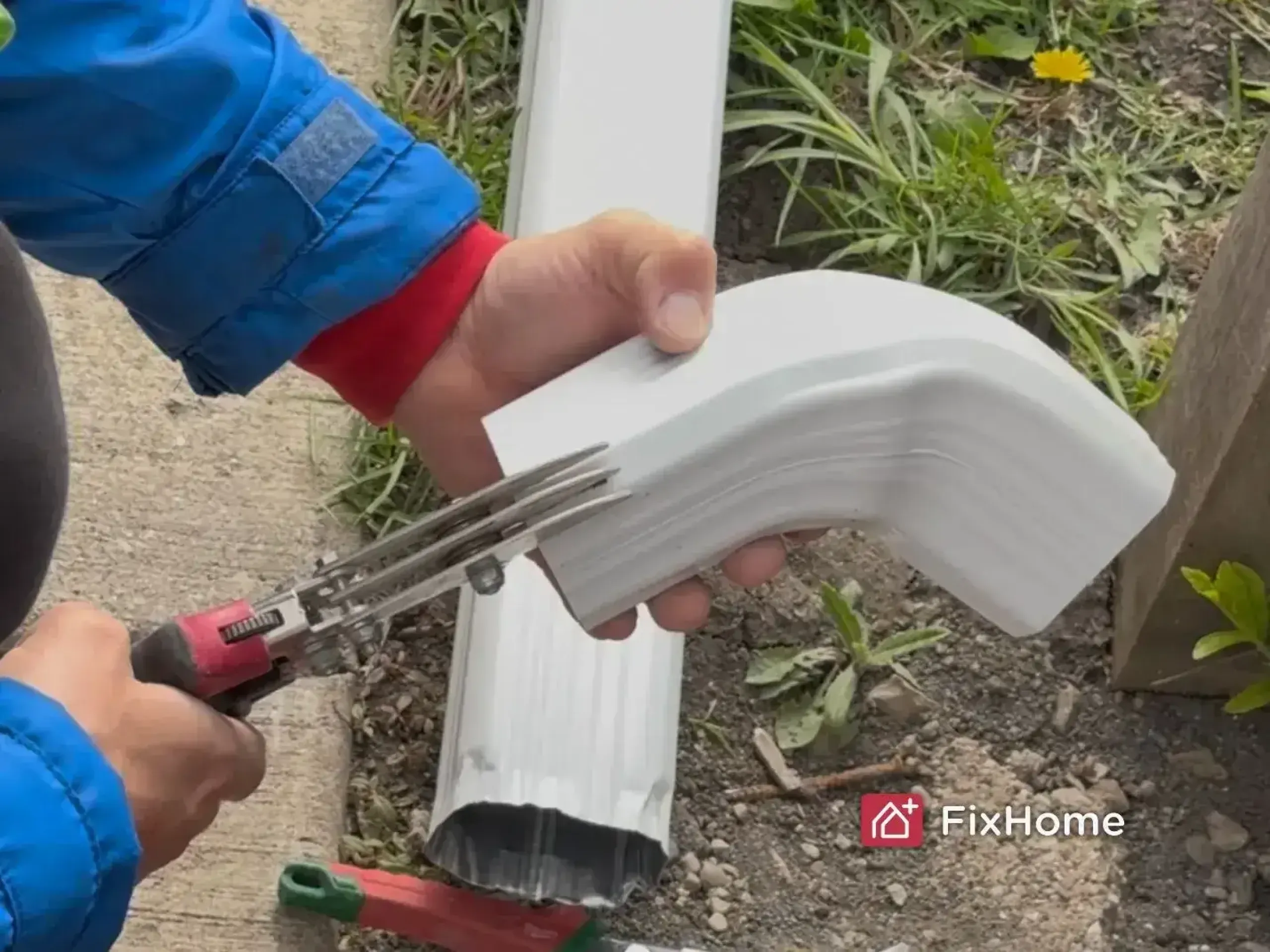
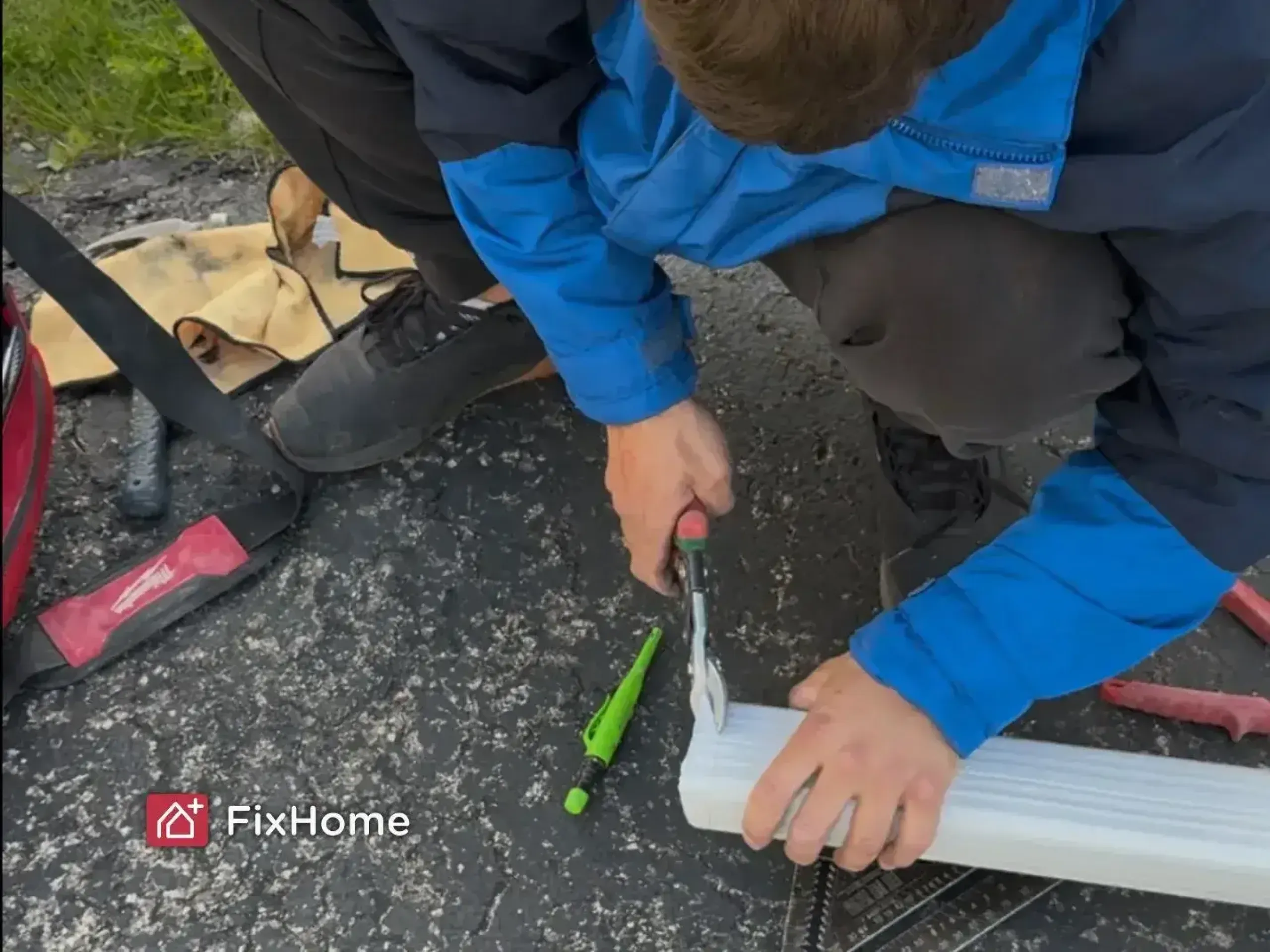
The second part of the job was the discharge end. The existing drain end was sending water in the wrong direction, toward the foundation rather than away from it. He cut the aluminum downspout to length, fitted new elbows to redirect the flow, and extended the drain end with new parts to move water well clear of the house. Each connection went together with sheet metal screws and sealed at the joints. No loose fittings, nothing relying on friction alone.
Rerouting the discharge this way is straightforward when the angles work out, but the elbow configuration takes a few dry fits before committing. He checked the slope on the extension before securing it. Water needs to move forward, not pool in the pipe.
Water moving the right direction again
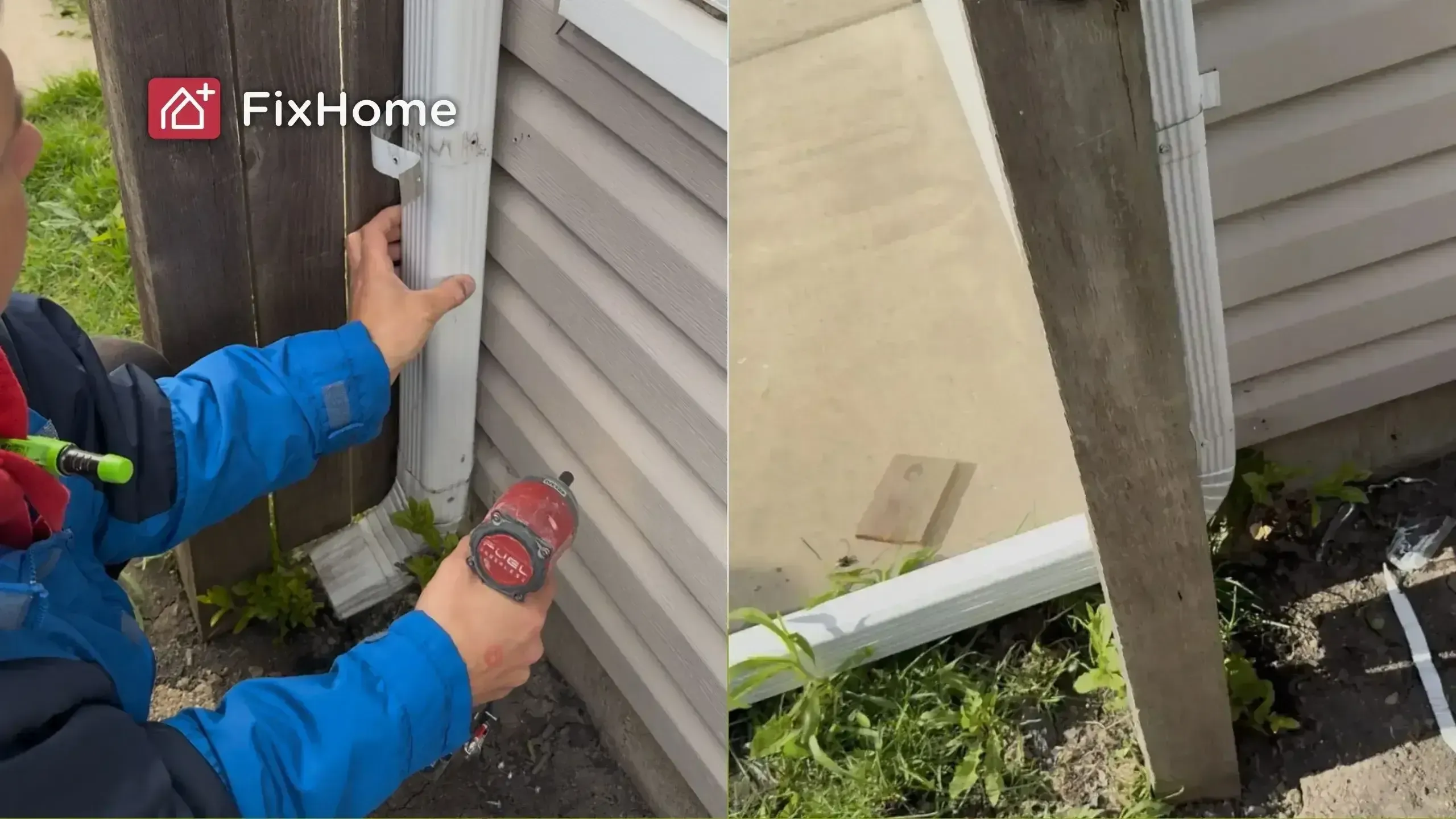
The joint at the top is dry. Gutters and downspouts are draining properly now. The rebuilt discharge end carries water out and away from the siding instead of dumping it against the house. New aluminum elbows at the base sit low to the ground, out of the way of the mower. A clogged downspout doesn't look like a serious problem until you trace what it actually does. Water that has nowhere to go ends up against the foundation. That's how basement leaks start. By the time it shows up inside the house, the repair isn't a downspout cleaning anymore.
If something's off with your downspouts in Mundelein (60060) or the surrounding Lake County area, a leak that doesn't make sense, water ending up where it shouldn't, gutters that drain slowly. It's usually fixable in one visit. Add it to the FixHome+ app and we'll take a look.
Need help with a similar project?
Download FixHome+ and take control of your home tasks.
F.A.Q.
A few signs worth watching for, especially before the leak shows up. Listen during the next heavy rain — a healthy downspout has a steady rushing sound; a partially clogged one gurgles or sounds slow. Look at the discharge end after a hard rain: if water isn't pouring out the bottom at the rate you'd expect given the rainfall, something is backed up. Check the seam at the top of the downspout for staining or efflorescence (white mineral deposits) — that's where slow leaks leave evidence even between rains. Offsets are the most common clog point because of the angle, so if your downspout has one, that's the section to inspect first.
Yes, indirectly. A clogged downspout backs water up into the gutter, which then overflows or discharges at the wrong spot — usually right against the house. Over time, that water saturates the soil around the foundation, eroding it, finding cracks, and showing up as basement moisture or seepage. The downspout itself doesn't damage the foundation; where the water ends up does. That's why rebuilding the discharge end to move water away from the house matters as much as clearing the clog.
For homes with mature trees nearby — which describes most of Mundelein and the surrounding Lake County suburbs — twice a year is the right baseline: once in late spring after the seed pods and helicopters drop, and once in late fall after the leaves are down. Properties with less tree cover can usually get by with once a year, in late fall. Homes that have already had a clog like the one in this job should check more often until the pattern is clear — sometimes a specific tree or drainage angle causes faster buildup that catches up before the next scheduled cleaning.
More from our blog.
Discover more insightful and engaging content from our blog.