Is it better to paint or stain a deck? For most decks in the Chicago suburbs, stain is the better choice. Penetrating finishes hold up better than paint in freeze-thaw climates because they move with the wood instead of cracking over it. Solid stain is a middle option worth considering: it covers like paint but penetrates like stain. Paint still works on older, heavily weathered decks that need full coverage.
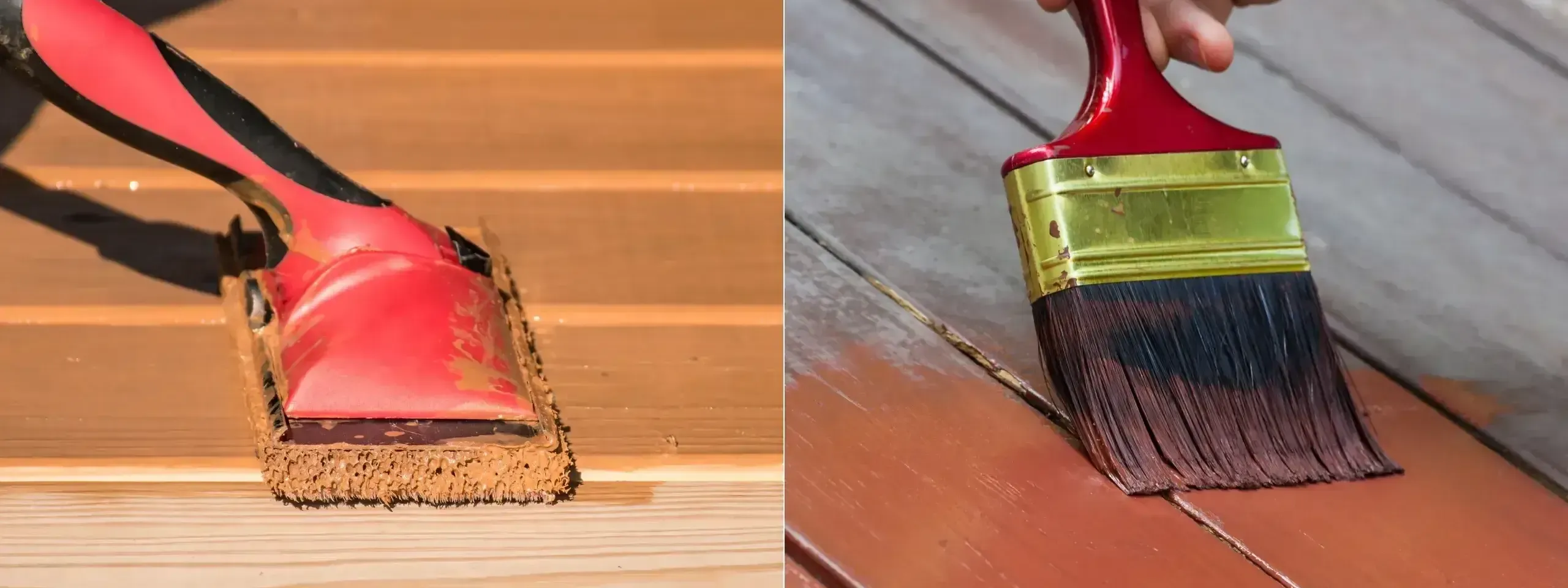
Your deck has seen better days. The color has faded, there's a grey patch near the steps, and the finish isn't doing much anymore. You know it's time to refinish. But the moment you start looking at products, you hit the same question every homeowner hits: stain or paint?
Most national guides frame this as a preference question. You like the natural wood look? Stain. You want a fresh color that covers everything? Paint. That advice works fine in North Carolina or Arizona. In the Chicago suburbs, the decision depends less on what you like and more on what survives the winter.
What's in this article
- How Stain and Paint Actually Work on Wood
- When Stain Is the Right Choice
- When Paint Makes More Sense
- The Third Option Nobody Talks About: Solid Stain
- Why Chicago's Climate Changes the Calculation
- Does Your Wood Type Matter?
- Can You Switch?
- The Water Bead Test
- What We Recommend for Most NW Suburb Decks
- Frequently Asked Questions
How Stain and Paint Actually Work on Wood
The difference is simple, but it matters more than most people realize.
Paint forms a film on top of the wood surface. It creates an opaque barrier that hides everything underneath. That film sits on the surface rather than bonding into the wood's structure.
Stain soaks into the wood fibers. It becomes part of the board rather than sitting on top. The finish moves with the wood as it expands and contracts through temperature and humidity changes.
On a horizontal surface like a deck floor, one that collects standing water, snow, and ice, then gets baked by summer sun, the penetrating vs. film-forming distinction is the main reason deck professionals in colder climates lean toward stain over paint.
When Stain Is the Right Choice
Stain is the better fit for most Chicago-area decks. Here's when it's the clear call.
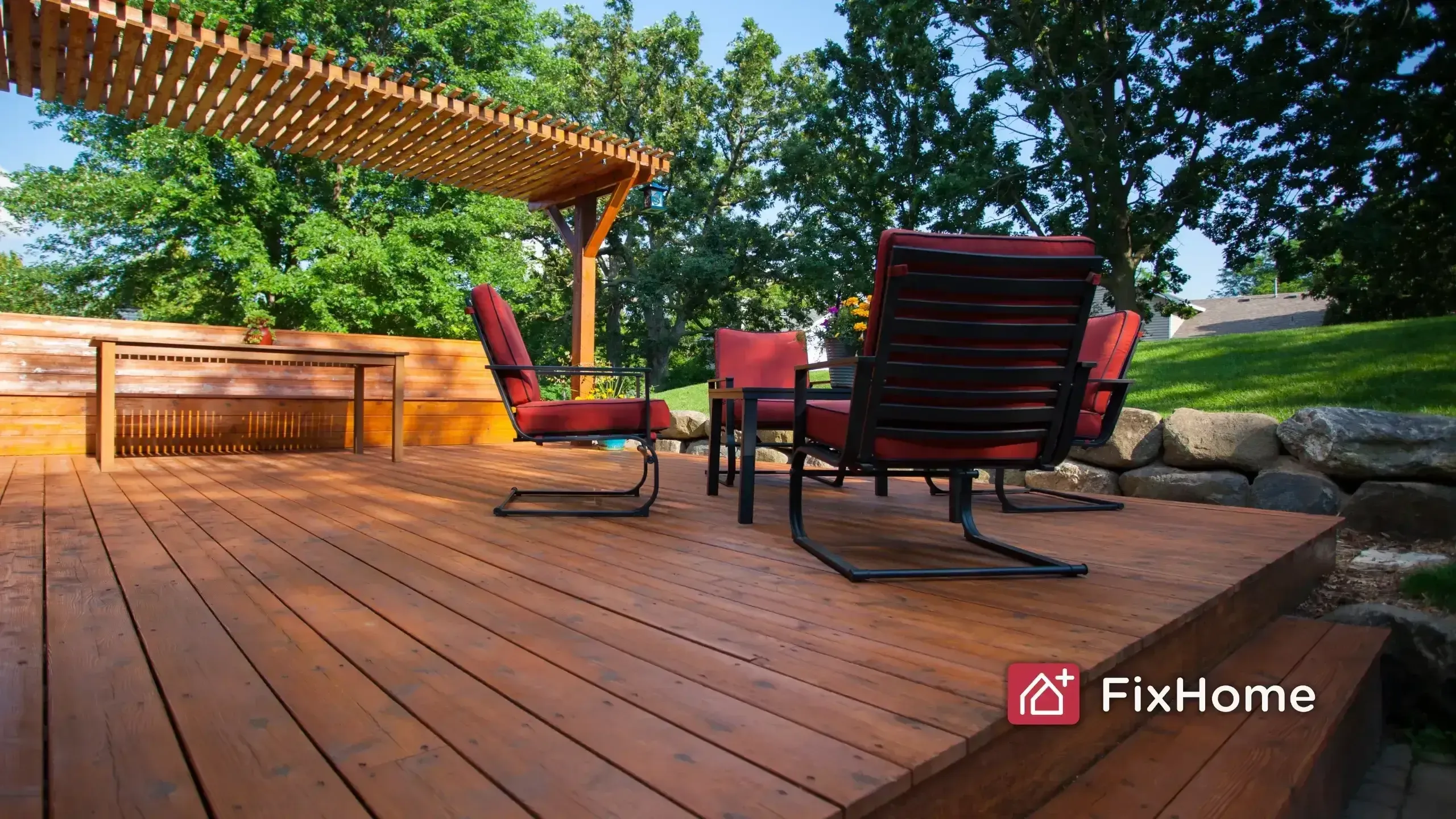
The wood is in decent condition. If the grain is still attractive and the boards are structurally sound, there's not much reason to cover it up. Semi-transparent stain lets the character of the wood come through. Semi-solid adds more color while keeping some texture visible.
You want lower-maintenance recoating. When a stained deck needs refreshing, the process is manageable: clean, lightly sand the worn spots, reapply. You're rarely starting from scratch.
Slip resistance matters. Stain keeps the natural texture of the wood intact. Paint builds up a smoother film that gets slippery when wet. If you have kids running around or older family members using the deck, that's worth thinking about.
You're working with newer wood. Fresh cedar, pressure-treated lumber that's had time to dry, or any structurally sound deck within its first decade is a natural candidate for stain.
On the cost side, professional deck staining in the Chicago area typically runs less per maintenance cycle than repainting. Because stain fades rather than peels, you rarely face the expensive strip-and-start-over job that failing paint often requires.
When Paint Makes More Sense
Paint isn't the wrong answer across the board. There are situations where it's the right one.
The deck is heavily weathered. Old, patched, or discolored boards that you'd rather not look at are a legitimate reason to cover everything. Paint does concealment better than anything else.
You want a specific color stain can't deliver. Stain products are mostly browns, grays, and earth tones. If you want navy, white, or something that matches your house's painted trim, paint is the only way to get there. For what it's worth, white stain does exist, but it doesn't hold up on a horizontal surface that gets walked on and rained on. White on a deck floor is paint territory.
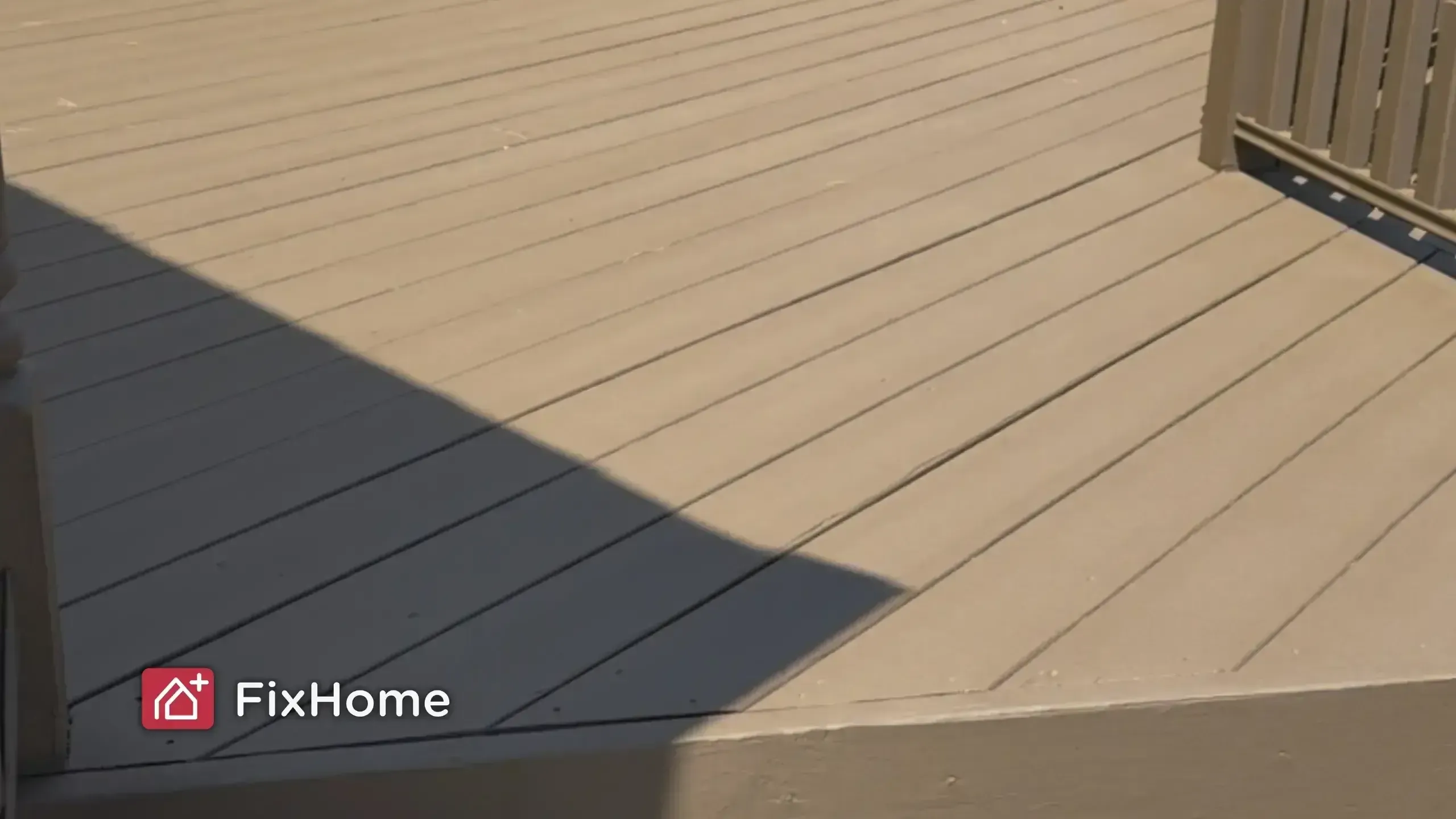
The deck already has paint on it. If a previous owner painted the deck and the coating is still intact, repainting is the most practical path forward. Switching from paint to stain means stripping the entire surface to bare wood. That's a big job.
Vertical surfaces. Paint's moisture-trapping problem is specific to horizontal surfaces that hold standing water. Railings, balusters, and vertical trim can be painted without the same risk. A lot of professionals stain the deck floor and paint the railings. It's a combined approach that works well.
The Third Option Nobody Talks About: Solid Stain
Most guides frame this as a two-way decision. It isn't.
Solid stain sits in the space between semi-transparent stain and paint. It's opaque, meaning it covers the wood grain the way paint does, but it penetrates the surface rather than forming a film on top. That distinction makes a real difference in how it performs.

Because solid stain soaks into the wood, it expands and contracts with the boards instead of sitting rigid on the surface. When it eventually fails, it fades and wears down rather than peeling in sheets. Recoating doesn't require scraping or stripping. You clean the surface and apply a new coat.
For homeowners who want the coverage of paint without the long-term maintenance headaches, solid stain is often the better answer. That's especially true in a freeze-thaw climate like Chicago's, where film coatings take a beating every winter.
Why Chicago's Climate Changes the Calculation
Here's where national advice breaks down for homeowners in the NW suburbs.
The Chicago area typically sees 40 to 60 freeze-thaw cycles between November and late March. Most Southern states see fewer than 15 per winter. Each cycle puts stress on a deck coating: water gets into tiny cracks, freezes and expands, thaws and contracts. Do that 50 times in one season and you start to understand why a painted deck that "lasts 10 years" in Georgia can fail in 4 to 5 years here.
Lake Michigan adds another factor. The lake effect creates larger humidity swings throughout the year, which means the wood is constantly absorbing and releasing moisture. Film coatings don't breathe with those changes. They eventually crack under them. We covered the full breakdown of how temperature and humidity affect staining and painting conditions in a separate guide.
Chicago-adjusted lifespan estimates:
- Semi-transparent stain: 2 to 3 years on deck floors (about the same nationally — semi-transparent wears fast everywhere)
- Semi-solid or solid stain: 3 to 4 years with good prep and a quality product (national average is 4 to 5)
- Paint: 5 to 7 years before significant failure risk (not the "up to 10 years" in most national guides)
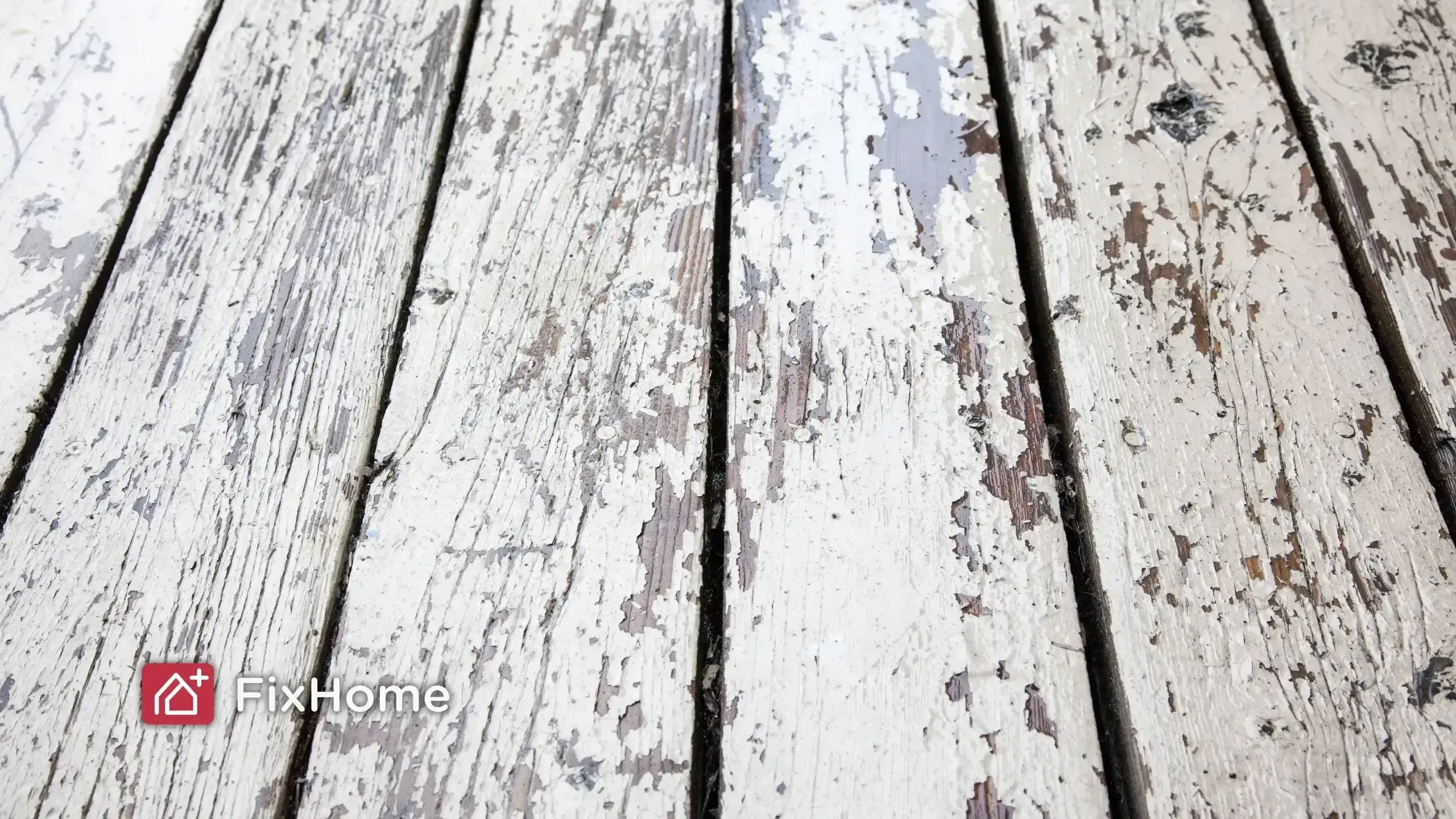
The real issue with paint isn't that it eventually fails. Every finish does. It's the failure mode. When paint goes in a freeze-thaw climate, it tends to go all at once: peeling in sheets, with moisture trapped underneath long enough to cause rot. That's an expensive repair. Stain failure looks like gradual fading. You clean and recoat.
Does Your Wood Type Matter?
Yes! In my experience, many homeowners tend to skip this important step.
Pressure-treated lumber is the most common deck material in the NW suburbs. When it's freshly installed, it needs time to dry before stain will absorb properly. A full season is typical. Stain applied too early just sits on the surface. Paint can go on sooner with the right primer, but then you're committed to that maintenance cycle from the start.
Cedar and redwood have natural oils that can interfere with adhesion if the surface isn't cleaned thoroughly before application. Both take stain beautifully once prepped, and the visible grain on quality cedar is one of the best arguments for semi-transparent stain.
Composite decking generally should not be painted or stained. Most manufacturers, including Trex and TimberTech, will void your warranty if a coating is applied. Always check the product specs before putting anything on composite boards.
Previously finished wood is where the existing coating determines what happens next. Old paint that's peeling needs to come off before anything new will bond. Old stain can usually be recoated after cleaning and light sanding, as long as you stay with a compatible product.
Can You Switch?
This is one of the most common questions homeowners ask, and it deserves a straight answer.
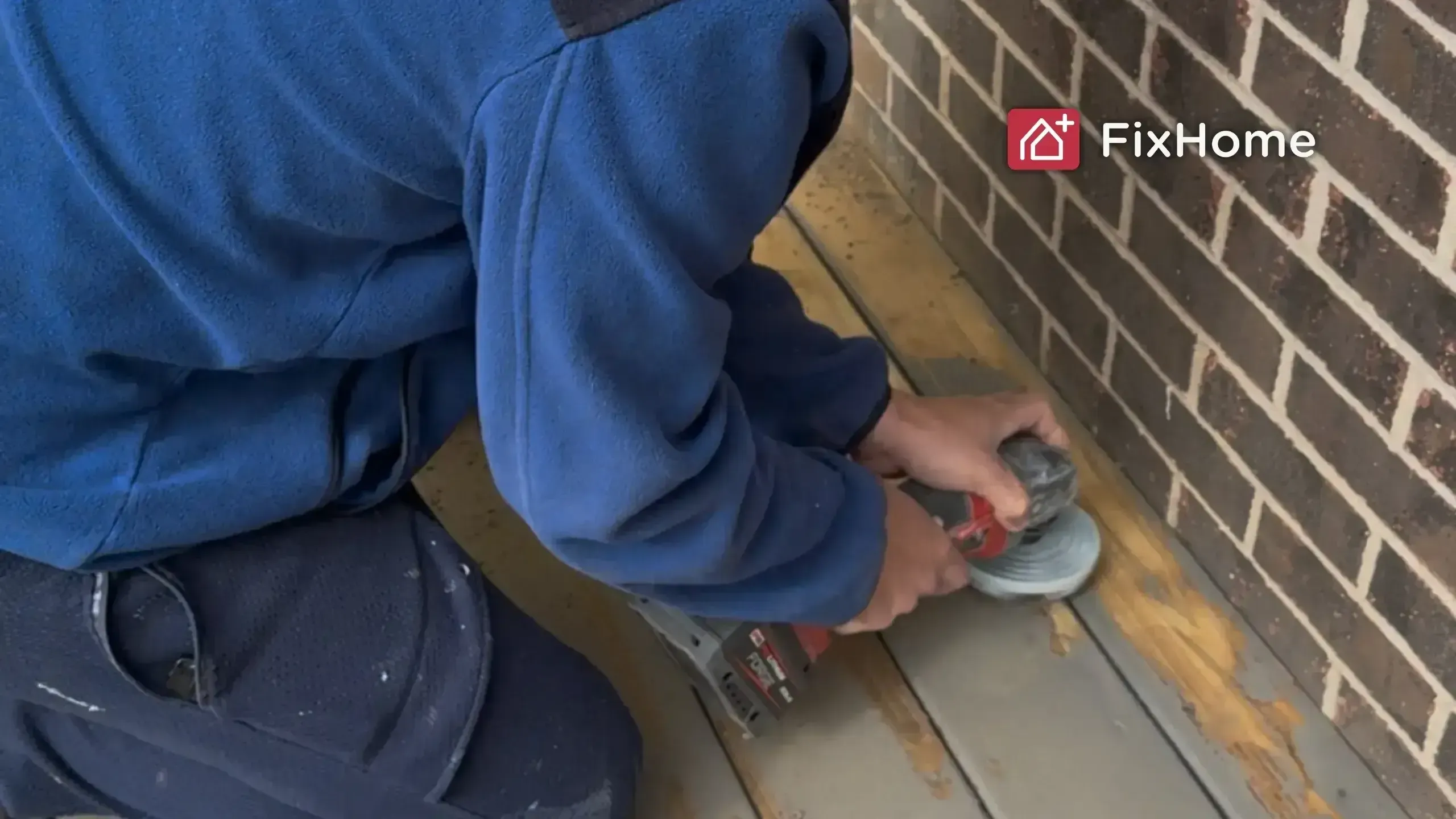
Can you paint over a stained deck?
Yes. Sand the surface to dull the old finish, clean thoroughly, apply a quality exterior primer, then paint. Two coats minimum. The prep is more involved than recoating with stain, but it works when done right.
Can you stain over a painted deck?
Not without removing the paint first. Stain needs to penetrate bare wood fibers. It can't get through a paint film. Applying stain over intact paint leaves you with a product that has nowhere to go. To make the switch, you need to strip the deck to bare wood through sanding or chemical stripping. It's a significant job, but doable on a deck in good structural condition.
What about solid stain over paint?
Solid stain over clean, well-sanded latex paint can sometimes work as a bridge solution. The key is that the existing paint needs to be well-adhered with no lifting or bubbling. Sand any problem areas first. It's not the textbook approach, but it's a practical one when the goal is to move away from full paint without stripping everything.
What about railings?
Different rules. The moisture problem with paint is specific to horizontal surfaces that hold standing water. Railings shed water rather than collecting it. Painting railings, balusters, and vertical trim is standard practice and doesn't carry the same failure risk as painting deck floor boards.
The Water Bead Test
Here's a habit worth picking up. Once or twice a year, pour water on a few different spots across the deck: near the stairs where foot traffic is heaviest, in a shaded spot that stays damp, and on a board in full sun.
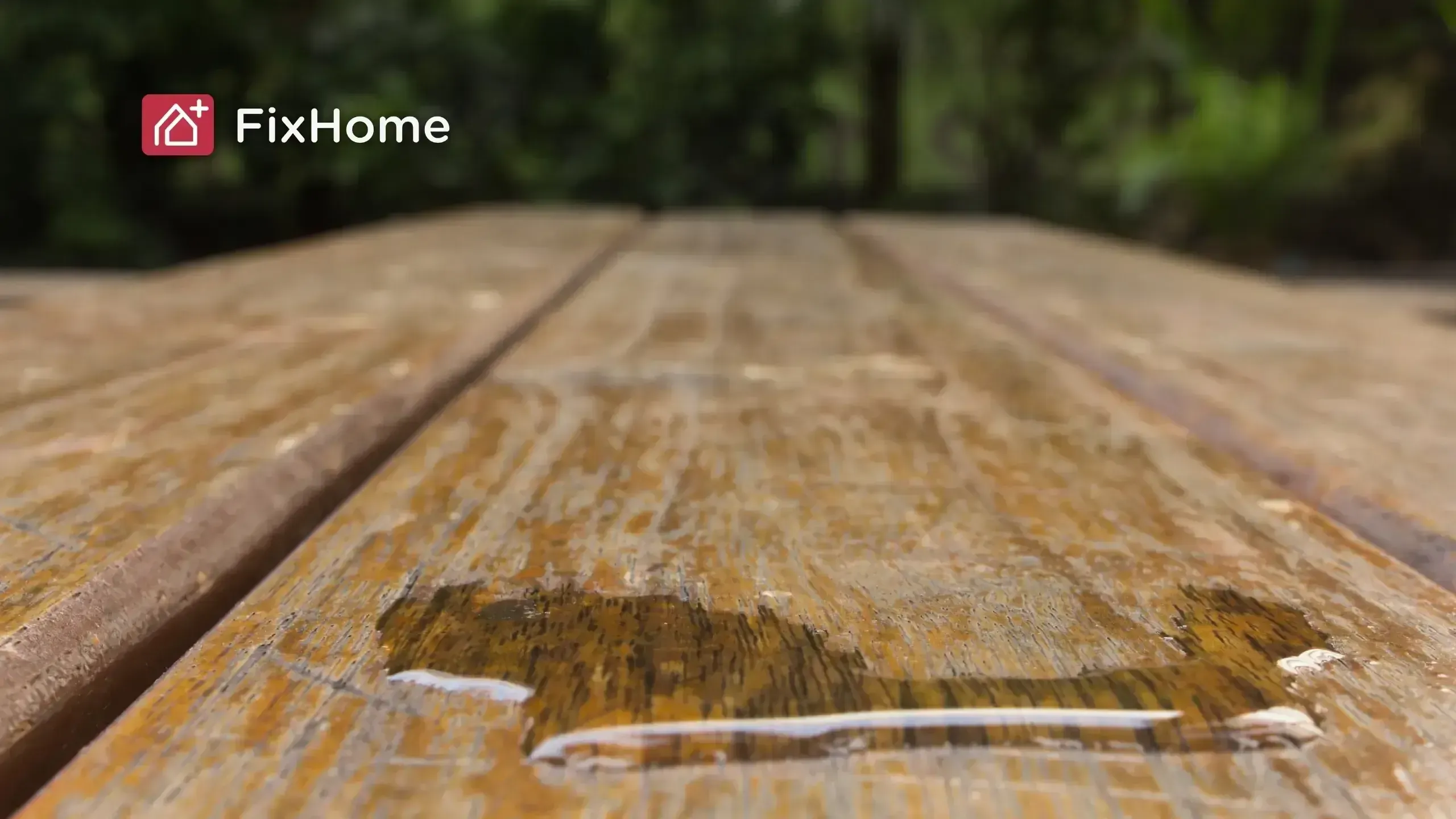
Watch for about 10 minutes.
- Water beads and holds its shape. The finish is still doing its job. You have time.
- Water darkens the wood slowly over 5 to 10 minutes. The finish is wearing thin. Plan to reapply this season.
- Water soaks in right away. The finish is gone. The wood is unprotected. Reapply as soon as conditions allow.
In the Chicago area, the best time to do this test is April or May, after the last freeze-thaw cycles and once the wood has dried out from winter. Fall application before winter is risky. A coating applied in October may not cure and bond the way a May application will.
Temperature matters at application too. Most quality stains and paints need surface temperatures between 50 and 90 degrees with no rain in the forecast for at least 48 hours. In the NW suburbs, that window is realistically May through mid-September.
What We Recommend for Most NW Suburb Decks
For the decks we see in Buffalo Grove, Wheeling, Vernon Hills, and the surrounding area, the answer is usually solid stain or semi-solid stain applied over properly prepped wood.
The combination of freeze-thaw cycles, lake-effect humidity, and pressure-treated lumber in most suburban builds makes penetrating finishes the practical choice. When paint fails in these conditions, it fails hard. Peeling, blistering, moisture trapped underneath the coating long enough to damage the boards. Solid stain gives you the coverage without that risk.
If the deck is new pressure-treated construction, wait one full season before applying any finish. If it's cedar in good shape, semi-transparent stain shows off the wood. If the boards are weathered and you need to hide their condition, solid stain is the right tool.
Prep matters as much as product. Power washing, checking for soft spots and loose fasteners, and letting the wood dry properly before application are what separate a finish that lasts five years from one that fails in two. If boards are split, cupped, or showing soft spots, deck repair should come before any coating decision.
If you live in the NW Chicago suburbs and your deck needs attention this season, download the FixHome+ app and book your deck visit. We'll look at the wood condition, recommend the right finish for what's actually in front of us, and handle the job when conditions are right.
Frequently Asked Questions
In Chicago's climate, paint has a longer theoretical lifespan but often fails sooner than expected because of freeze-thaw moisture damage. Quality solid stain typically lasts 3 to 4 years with straightforward maintenance when it's time to recoat. Semi-transparent stain needs refreshing every 2 to 3 years. For most homeowners, stain's easier reapplication process makes the total effort comparable to paint over a 10-year window.
Not without removing the paint first. Stain needs bare wood to penetrate and bond properly. Solid stain over intact latex paint can sometimes work as an interim solution, but the best long-term result comes from stripping to bare wood before applying any stain product.
Penetrating stains handle Chicago's freeze-thaw cycles better than paint because they move with the wood rather than forming a rigid film. For floor boards, solid stain is a better choice than paint if you want full coverage. For railings and vertical trim, paint works fine since those surfaces shed water rather than collecting it.
Check every spring with the water bead test and plan to reapply semi-transparent stain every 2 to 3 years, solid stain every 3 to 4 years. South-facing decks with full sun exposure and high-traffic areas near stairs wear faster than shaded sections. The water test is more reliable than any fixed schedule.
More from our blog.
Discover more insightful and engaging content from our blog.