To hang Christmas lights outside without damage, use Christmas light clips made for the surface instead of nails, staples or screws. Gutter clips go on gutters, shingle clips go under the roof edge, and siding clips hook behind the siding lap. Plug into a GFCI outlet, and don't climb higher than a ladder can safely reach. If you're in the NW Chicago suburbs and would rather not climb, hanging Christmas lights is one more job a FixHome+ handyman can do on a regular visit.

This article was updated on October 14, 2026
The clip list above is the short answer. The reason it matters shows up months later: a split along a siding board, a nick in the cord insulation, water working in behind a gutter seam that a ladder bent back in November. None of it is visible while the lights are up.
So the strand is the simple part. What’s below is which clip goes on which surface, and how high it’s worth climbing to place it.
What to Use Instead of Nails
Nails, staples and screws are the damage. They split siding, crack gutters, and let water in behind the wall. A staple through the cord is worse. It cuts into the wire insulation, and that's a shock and fire risk you can't see.
- Use Christmas light clips made for the spot you're hanging on:
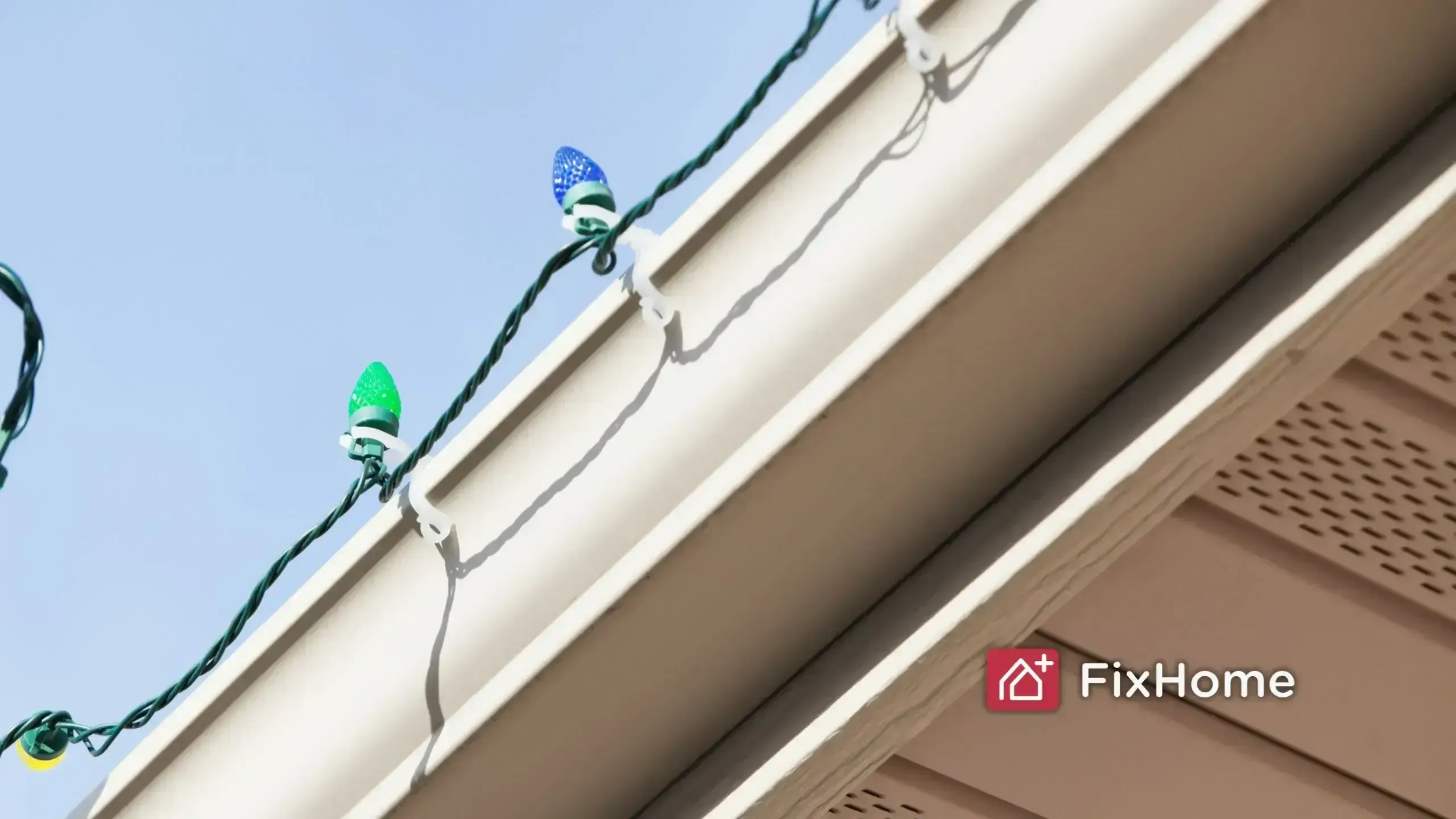
- Gutter clips hook over the gutter lip and hold the strand in place.
- Shingle clips slide under the edge of the roof shingle without bending or lifting it.
- Siding clips hook behind the bottom edge of a siding board.
- Brick clips grip the face or the mortar line, so you never drill.
Skip adhesive clips for anything that has to last. They lose their grip in the cold and on damp or dusty surfaces, and they can pull paint off when they let go. Fine for a short run near a door. Not much else.
How to Hang Christmas Lights on Gutters
Gutters are the most common place to hang lights, and the easiest to damage. A full gutter is heavy, and a ladder resting against it can bend it.
- Hook a gutter clip over the front lip, spaced evenly. Follow the spacing on the package, or about every 12 inches if it doesn't say.
- Clean the gutter first. Wet leaves and ice make the clips slip, and a clogged gutter overflows right behind your lights. (If you haven't done it yet, our gutter cleaning guide covers it.)
- Never lean the ladder on the gutter. Use a ladder stabilizer that rests on the wall or the roof instead.
Siding and Brick: No Nails, No Drilling
Siding is where nails do the most damage, so don't use them. Hook a siding clip behind the lower edge of a board. That leaves the board untouched and the weather seal intact. On brick, use a brick clip on the mortar line or the face. Drilling into brick is a permanent hole, and it lets water in.
Test one clip first. Old or brittle siding can crack when you hook the clip, especially in cold weather. Better to find that out on one spot than on twenty.
The Roofline, and Where to Stop
The roofline is the highest-risk place on the house, and the one part of this job not to improvise.
- From a ladder, you can reach the first-floor eave. Shingle clips make that run easy.
- Don't walk on the roof to reach a peak or a second-story edge. Roofs are slippery with frost and morning dew, and a steep pitch makes it worse.
- Two-story homes and steep roofs are a job for someone with the right equipment, not a DIY one.
If you want the look of a lit roofline without the climb, lights along the first-floor eave, porch, windows and doorway get you most of it.
Ladder Safety
Most of the danger in hanging Christmas lights is the ladder, not the electricity.
- Set the ladder on firm, level ground. Place the base one foot out for every four feet of height.
- Keep three points of contact. Don't carry the lights up in your hands. Use a tool belt or hand them up.
- Keep your belt buckle between the rails. If you have to reach past that, climb down and move the ladder.
- Stay at least 10 feet from power lines.
- Skip it in wind, rain or ice. Frost on a ladder rung is enough to cause a fall.
- Work with a second person on the ground. It makes the job faster and safer.
Power, Outlets and Timers
- Test the lights before you hang them. Plug in each strand on the ground. A dead bulb is much easier to fix there than from a ladder.
- Use lights rated for outdoor use. The package will say so.
- Check the maximum number of strands you can connect. It's printed on the box. LED strands draw less power, so you can usually connect more of them than incandescent ones.
- Use a GFCI outlet and an outdoor-rated extension cord. A GFCI outlet shuts off the power if it detects a fault, which matters on a wet porch or in the snow.
- Keep plug connections off the ground. Use a weatherproof cover or a raised spot so they don't sit in meltwater.
- Put the lights on a timer. It saves power and means you never have to plug in on a cold porch.
Hang them before the first hard freeze. Plastic cords stiffen and crack in the cold, and clips are harder to place with gloves on.
What Does It Cost to Hire Someone?
Angi's Chicago page puts the average professional Christmas light installation at about $600, with most projects between $264 and $937. That's an average for full-service companies that supply the lights, hang them and take them down, and the real cost depends on the size of your house. Prices checked October 2026.
Want Help Hanging Christmas Lights Near You?
If you live in Buffalo Grove, Wheeling or another NW Chicago suburb and would rather not be up a ladder in November, a FixHome+ handyman can hang your lights. Holiday lights setup is on the service list of our handyman subscription service. The lights go on your next visit in the app, next to the rest of the fall list: gutter cleaning, caulking, whatever else has been waiting. A single visit without a subscription is also available. How a FixHome+ subscription works is covered in a separate article.

Frequently Asked Questions
Use gutter clips that hook over the front lip. Space them evenly, and put the ladder against the wall with a stabilizer, not on the gutter.
Yes. Use a siding clip that hooks behind the bottom edge of a board. It doesn't pierce the siding, so the weather seal stays intact.
Check the maximum on the package. LED strands use less power, so you can usually connect more of them than incandescent ones. Don't exceed the number printed on the box.
Before the first hard freeze, usually in early to mid-November. Cords stiffen and crack in the cold, and clips are harder to place with gloves on.
Not unless you can reach it from a ladder. Walking on a roof is the riskiest part of the job. Stick to the eave you can reach from the ladder, or hire someone for the rest.
More from our blog.
Discover more insightful and engaging content from our blog.