Before you blame the utility company for your high bills, check your own setup. In NW Chicago suburbs homes, the same causes sit behind most high electric bills: an AC or fridge running nonstop on low freon, air leaking through door and window gaps, an electric water heater past its tenth year, and standby devices drawing power around the clock. Heating and cooling take about half of a home's energy use; the water heater, another 18%—aging appliances, space heaters, and shared meters fill out the list. Every cause leaves a sign you can check by hand, and most fixes are ordinary home maintenance, not new equipment.
A high bill is a symptom. The cause is somewhere in the house — and most causes leave signs you can check yourself.
Updated: July 13, 2026
The bill arrives higher than expected. Maybe it jumped this month, maybe it has been creeping up for half a year, and you finally stopped ignoring it. Two things drive that number. One sits outside your walls: utility rates have risen noticeably over the past few years, so part of any increase comes from the provider's side, and no amount of unplugging will touch it. Everything else comes from inside the house—and that's where the biggest high electric bill causes hide: the HVAC system, the gaps around doors and windows, the water heater, and a crowd of devices that never fully turn off.
The house side is the fixable side. We spend our working days in homes across Buffalo Grove, Wheeling, Vernon Hills, and the suburbs around them, and "why did my electric bill go up?" comes up in these houses year-round. In February, overheating; in July, overcooling. The causes repeated in the 1970s ranches and new construction alike. Each one leaves a physical sign, and none of them takes special tools to find.
What Drives an Electric Bill Up: The Main Causes
It's rarely a single cause. More often, two or three stack up—a rate bump, a system working harder than it should, and a season doing its worst—which is why the bill feels random. Working down the list in order of impact usually finds them.

Heating and Cooling: The Biggest Line on the Bill
Space heating and air conditioning take about half of a typical home's energy use, according to the U.S. Energy Information Administration, which makes the HVAC system the first suspect in almost any bill spike. A system that runs constantly, a thermostat set aggressively (72°F or higher in January, 68°F in July), or a filter that hasn't been changed in a year all mean longer run times for the same comfort. Homes with electric resistance heat—baseboards or an electric furnace—feel this hardest of all, because resistance heating is the most expensive way to warm a house, and every thermostat degree shows up on the bill. Set 68°F in winter and 75-78°F in summer as baselines, change filters on schedule, and let a programmable thermostat ease off at night and when nobody's home. An older furnace or AC that can no longer hold temperature needs a professional inspection. Struggling systems don't fail politely; they fail expensively.
This causes peaks twice a year, deep winter and high summer, whenever the gap between indoor and outdoor temperatures is widest.
Low Freon: When the Bill Is High "for No Reason"
If your electric bill is high for no reason you can point to, with the same habits and nothing new plugged in, check the air conditioner first. When freon (the refrigerant that actually moves heat out of your house) runs low, the AC keeps running but stops cooling. The compressor works continuously trying to reach a temperature it can't reach, and the compressor is the single hungriest part of the system. The result: a house that stays warm and a meter that spins the whole time.
Low freon almost always means a leak—the system doesn't burn it up like fuel. The signs you can catch yourself:
- The AC runs for hours without cycling off
- Air from the vents is lukewarm instead of cold
- Ice forms on the refrigerant line or the outdoor unit, even in July
- A faint hissing or bubbling sound near the lines
Freon work is licensed, so this is not a DIY repair and not a handyman repair either. Call an HVAC technician to find the leak, seal it, and recharge the system. Until then, running the AC harder only feeds the meter.
A summer cause almost by definition. The longer the cooling season runs, the more a low-refrigerant system costs.
Drafts and Air Leaks
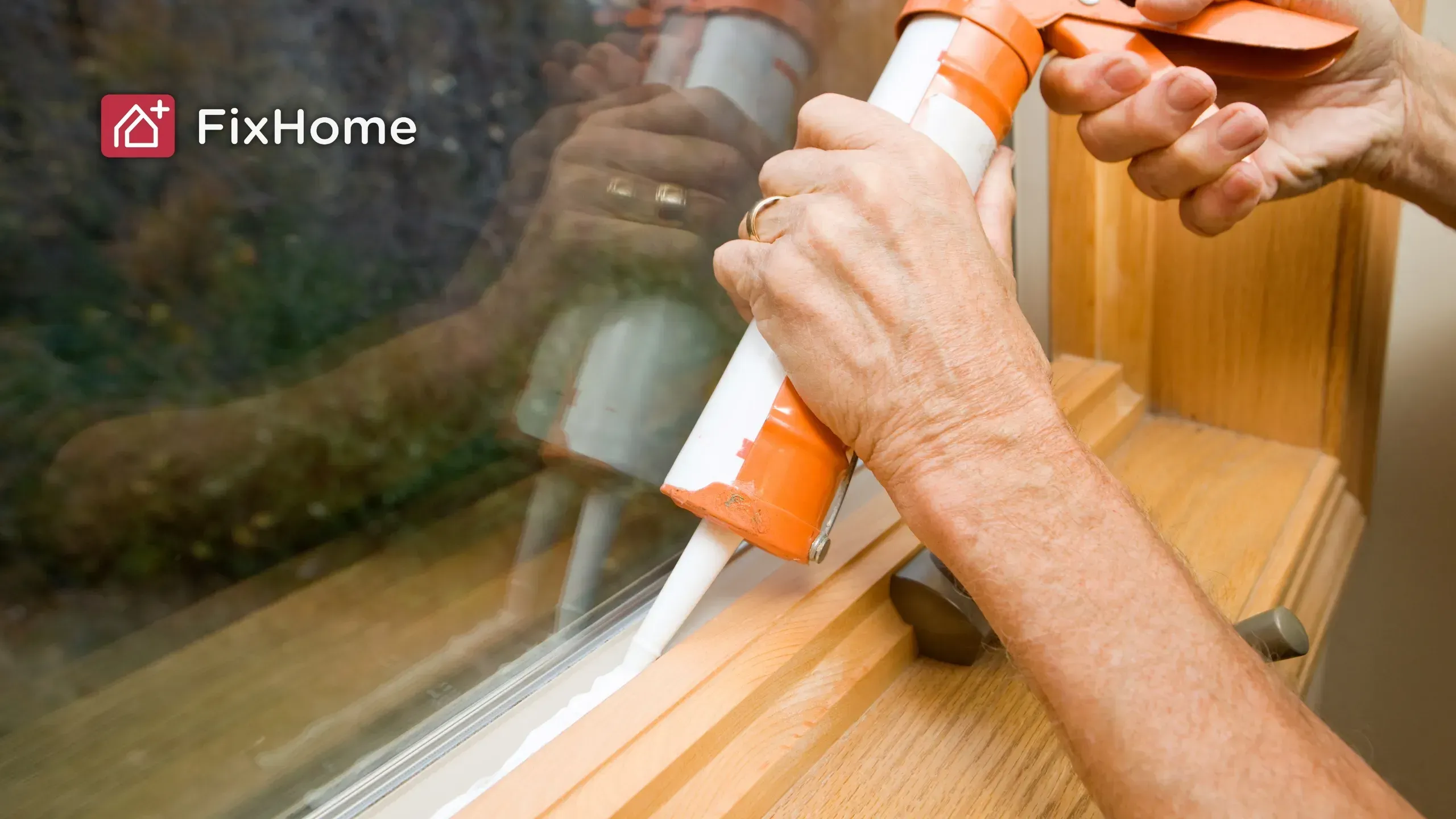
Gaps around exterior doors and window frames let conditioned air escape, so the furnace or AC runs longer to replace what leaks out. Checking is simple: on a day when it's clearly hotter or colder outside than inside, run a hand along door edges and window frames. If you feel the outdoor temperature on your skin, air is moving through. Weatherstripping, door sweeps, and frame caulk close most of these gaps—small repairs that FixHome+ handles on a standard visit. The bigger cousin of the same problem is thin insulation in attics and rim joists: less of a weekend job but the same physics.
Leaks cost the most in January and July, when the indoor–outdoor temperature gap is widest.
The Electric Water Heater
An electric water heater works all day whether you notice it or not, and water heating is one of the largest energy uses in the home. The U.S. Department of Energy says it typically accounts for about 18% of a household’s utility bill. Three things push its share up: a thermostat set above 120°F, heating elements coated in sediment that run longer to deliver the same hot water, and tank insulation that fades with age. The dial is a two-minute owner fix; set it to 120°F. Sediment and worn elements are a plumber's job. And if the unit is past ten years old and the tank feels warm to the touch, it's radiating paid-for heat into the utility closet around the clock.
Devices That Never Turn Off
A share of your bill is drawn by things that look off. TVs on standby, game consoles in "rest" mode, chargers, routers, printers, the coffee machine with a clock — each pulls a trickle constantly, and those trickles have been running for years without you knowing. That's not a habit problem; the draw is invisible by design. Once you know it exists, it's easy to manage. A $15 wattage meter shows which devices pull the most while "off," and a switchable power strip cuts a whole cluster: TV, console, and sound system, with one click.
Aging Appliances
An old refrigerator or dryer can quietly pull far more power than its label once promised, usually not because it was built badly, but because maintenance debt piled up. Dusty condenser coils make a fridge run longer. A worn door gasket does the same (close the door on a dollar bill — if it slides out with no resistance, the seal is done). A lint-clogged dryer vent stretches every cycle. Cleaning coils, vents, and seals recovers a lot of lost efficiency. And one cousin of the AC problem lives in the kitchen: a fridge that runs nonstop yet struggles to stay cold may be low on its own refrigerant. It's the same physics as low freon in the AC—the compressor grinds around the clock, chasing a temperature it can't reach—and the same verdict: sealed-system work for a technician, not a screwdriver job. When an appliance is genuinely at the end of its life, that's the one call outside handyman territory: an appliance technician can tell you whether it's worth repairing, and what happens after that verdict is your decision.
Space Heaters
Most plug-in space heaters draw 1,500 watts at full power. It's printed right on the unit, and it's roughly what an entire circuit is comfortable carrying. Running two or three across the house shows up on the bill immediately. Use one in the occupied room, not as a substitute for the furnace.
Strictly a cold-season cause. If the bill spiked in July, look at the AC and the freon section above instead.
A Meter That Isn't Only Yours
Rare, but real: in some rentals and converted multi-unit buildings, one meter serves more than one unit, and one household pays for another's usage. If you rent and the bill never matches your habits, ask the landlord or the utility to confirm the meter serves your unit alone.
How to Reduce Electricity Costs at Home
Fixing the causes above does most of the work. The moves below stack on top of it.
Run the System on a Schedule
A thermostat that follows your actual life, easier daytime settings when the house is empty, and a setback at night trims run time without anyone feeling the difference. If yours is still manual, a smart thermostat installation pays for itself in habit alone: schedules don't forget.
Two Illinois-specific moves are worth adding. The first is Peak Time Savings from ComEd, the utility that delivers electricity to the majority of the NW Chicago suburbs. The program credits your bill for cutting usage during announced peak windows, a few hours on hot summer afternoons. Enrollment is free if you have a smart meter, alerts land the same day at least an hour before the window starts, and there's no penalty for sitting one out. Shifting laundry, the dishwasher, and EV charging to the evening usually earns the credit. You can enroll on the ComEd website.
The second is humidity. Chicago-area summers are muggy, and humid air feels warmer than the thermostat says it is. So people chase comfort by dropping the setpoint from 74 to 71, and the AC pays for every degree. A standalone dehumidifier in the damp rooms (basements here are the usual offender) or a whole-home unit lets you hold the thermostat a few degrees higher at the same comfort level. You fix the thing that actually feels bad instead of overcooling the whole house.
Set the Ceiling Fan Direction for the Season
Ceiling fans have a direction switch, usually on the motor housing, and most people have never touched it. Counterclockwise in summer pushes air straight down, creating a wind-chill effect on your skin. Clockwise on low speed in winter pulls air up and pushes the warm layer near the ceiling back down along the walls. Running a ceiling fan lets you raise the thermostat in summer with no loss of comfort. The AC does less, but the room feels the same. So one catch: fans cool people, not rooms. Turn them off when you leave.
Smaller Moves That Still Count
LED and smart bulbs draw little and run on schedules, so lights stop burning in empty rooms. Your electricity provider account shows hourly usage graphs—one evening with that chart usually reveals when the house spends the most, and a spike at 3 a.m. tells its own story. And if the bill stays stubborn after everything above, a professional energy audit maps heat loss room by room with equipment your hands and eyes can't match.
F.A.Q.s
Heating and cooling, by a wide margin—about half of a typical home's energy use goes to space heating and air conditioning. The electric water heater is usually the second option. Third place belongs to no single device but to the crowd: TVs, consoles, chargers, routers, and everything else drawing standby power around the clock. Any one of them is trivial; together they add up to a significant amount.
Yes, after heating and cooling, the water heater is usually the biggest single energy user in a home, so an aging or badly set unit shows up on the bill fast. The giveaways: hot water running out sooner than it used to, a tank that feels warm to the touch, or a thermostat dial set above 120°F.
A doubled bill is almost never one cause. Usually it's a rate increase stacked on a physical problem, arriving in a peak season. Start with the numbers: pull up the same month from last year in your electricity provider account and compare kilowatt-hours, not dollars. If usage is flat but the bill doubled, the answer is rates or your supply plan. If usage itself doubled, something in the house changed. The usual suspects are a struggling AC or furnace, a failing water heater element, or a space heater someone quietly started running.
Work from biggest to smallest. Compare this month's kilowatt-hours to the same month last year to confirm the problem is usage, not rates. Watch the AC or furnace: if it runs without ever cycling off, have it inspected. Feel around exterior doors and windows for drafts and seal what you find. Set the water heater to 120°F. Put the always-on cluster—TV, console, and sound system—on a switchable power strip. And enroll in programs like Peak Time Savings (check your provider's website for existing ones).
For most households, yes. Not because the device is clever but because schedules don't forget. The savings come from run time you stop paying for at night and when the house is empty, and payback usually lands within a season or two of heavy heating or cooling.
The quick self-check covers three things: drafts you can feel at doors and windows, a water heater tank that's warm to the touch, and an HVAC system that runs without cycling. For the full picture, a professional energy audit uses a blower door and a thermal camera to find leaks and thin insulation no hand can feel.
One Visit Instead of a To-Do List
Half the fixes above—weatherstripping, door sweeps, frame caulking, and smart thermostat installation—are exactly what a FixHome+ handyperson visit is for. If you're in Buffalo Grove, Wheeling, Vernon Hills, or the surrounding NW Chicago suburbs, download the FixHome+ app, add the tasks to your list, and Roman and the team will knock them out in one trip. It's also the easiest way to run a real home upkeep schedule instead of a mental note that never gets done.
More from our blog.
Discover more insightful and engaging content from our blog.